

























































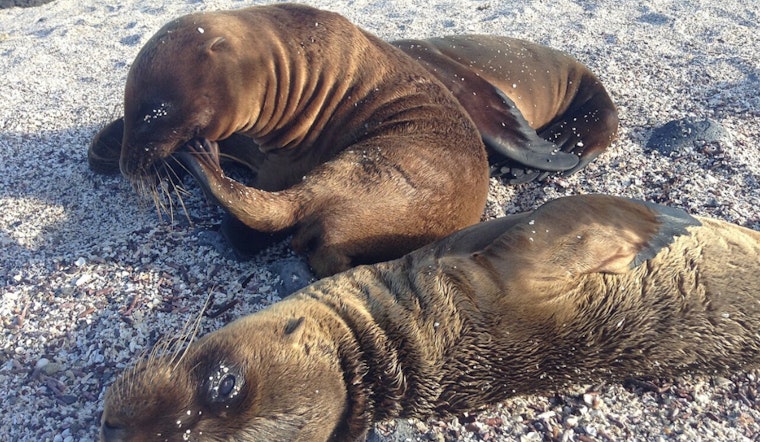
Three rehabilitated California sea lion pups shot out of their transport crates and into the Pacific off Redondo Beach this week, drawing cheers from tired but elated rescuers. Staff and volunteers from the Marine Mammal Care Center had spent weeks nursing the youngsters back from the brink, and their return to the surf felt like a badly needed win in a season full of bad news. Even in that feel-good moment, though, rescuers reminded onlookers that the ocean is not exactly safe right now.
According to the New York Post, the three pups, nicknamed Knoxie, Happy, and Halfpipe, were found emaciated along the Southern California coast in recent weeks before being brought in for treatment and released near the Redondo Beach Pier. The outlet also reported that investigators are tracking a string of related cases along the shoreline.
Marine Mammal Care Center officials say they are taking the threat very seriously. John Warner, the center’s CEO, told SFGATE that the nonprofit has put up a $10,000 reward for information that leads to a prosecution and urged local mariners, harbor workers, and anyone who spends time around the water to stay alert near docks and haul-out spots.
Bullets, X-rays, and a Worrying Pattern
Recent rescues and X-rays have revealed an unsettling pattern that goes well beyond the usual hazards of life at sea. Veterinarians and investigators are repeatedly finding California sea lions with bullet fragments and clear gunshot wounds. The Guardian reported on a recent case in which vets discovered two bullets lodged in a rescued animal’s skull, a stark example of how often rehabilitators are now confronting injuries that appear to be human-inflicted.
Legal Angle
Federal law is not exactly vague about this. Under the Marine Mammal Protection Act, it is illegal to harass, injure, or kill sea lions, and violations can bring fines, criminal charges, or both. NOAA’s Office of Law Enforcement has, in earlier incidents, offered rewards and notes that penalties can include civil fines, potential jail time, and even forfeiture of vessels involved in the crime. NOAA Fisheries also lays out how the public can report suspected violations and has circulated reward notices in previous Southern California cases.
Environmental Stress Makes Animals Vulnerable
All of this comes on top of the environmental problems already hammering California sea lions. Rescuers point out that intentional shootings and other deliberate harm are compounding a long list of existing pressures. Warming ocean waters, shrinking fish stocks, and recurring domoic-acid harmful-algae events have fueled mass strandings and widespread malnutrition that have pushed rehabilitation centers to the limit, the Los Angeles Times reported. Staff warns that human attacks could become one more avoidable cause of death for young animals that are already struggling to survive.
Officials Urge Vigilance and Roll Out a Bill
The New York Post reported that the Marine Mammal Care Center has launched a “marina watch” effort that leans on the eyes and ears of boaters, dockworkers, and coastal residents to report any suspicious behavior around marine mammals. The outlet also noted that California state Sen. Laura Richardson joined the Redondo Beach release and used the event to announce legislation that would designate the California sea lion as the state’s official pinniped.
Warner told the Post that the honorary title could help boost public awareness but would not, on its own, change criminal penalties, which is why he argues that enforcement, tips, and community vigilance still matter most.
Anyone who encounters a stranded, sick, or injured marine mammal is urged to report it immediately. The Marine Mammal Care Center’s rescue hotline is 1-800-39-WHALE, and its contact page lists local reporting options along with the San Pedro visitor center address. For suspected criminal harm to a marine mammal, NOAA’s enforcement tipline is available at 1-800-853-1964. Marine Mammal Care Center Los Angeles and NOAA Fisheries both provide additional reporting guidance.





