

























































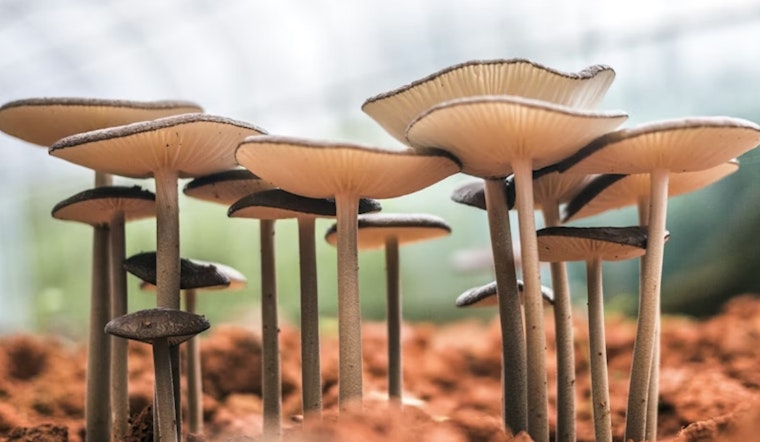
Silicon Valley office parks are quietly growing more than startups. Clusters of wavy-cap mushrooms are popping up in wood-chip beds around tech campuses, and a loose network of foragers says they slip in quick harvests between commutes and lunch breaks. Workers and amateur mycologists told reporters they have spotted colonies near buildings at Google, Genentech and 23andMe, where fog, steady irrigation and neatly spread mulch create prime habitat for certain Psilocybe species.
The result is an oddly local collision of corporate landscaping, Bay Area mycology culture and renewed interest in psychedelics, playing out in the shadow of some of the world's biggest tech firms.
Reporting by The San Francisco Standard documented sightings of Psilocybe cyanescens on multiple tech campuses and included interviews with foragers and regional mycologists. One source, who asked to go only by Greg, told the outlet he first found a patch tucked under wood chips at a Menlo Park business park in 2018. Citizen mycologist Alan Rockefeller summed up the new level of curiosity, saying, “These days, when someone sees mushrooms, they're going to take a closer look.”
How Wavy Caps Take Over the Mulch
Psilocybe cyanescens, commonly called the wavy cap, thrives on lignin-rich material such as wood chips and landscaping mulch. When conditions turn cool and damp, its mycelium can send up dense carpets of fruiting bodies that seem to appear overnight. As Bay Nature explains, these species are now well established across the Bay Area and can blend into the scenery until a big flush appears and the telltale blue bruising gives them away.
Foragers, Forums and the Mulch Economy
Local foragers told reporters that wood-chip landscaping, frequent irrigation and constant human activity make corporate campuses obvious hunting grounds. Some online discussions even describe people moving spores between mulched beds to encourage new patches.
The San Francisco Standard found accounts of serious hauls during peak months. Some people report harvesting pounds at a time in season, which local sources put roughly between late October and January.
Legal Lines on a Fuzzy Landscape
Policy and criminal law are not perfectly aligned on this topic. In 2022, San Francisco's Board of Supervisors passed a measure urging that entheogenic plants receive the lowest law enforcement priority, according to reporting by KALW. Even so, psilocybin and the mushrooms that contain it remain illegal under federal law. The U.S. Drug Enforcement Administration lists psilocybin as a Schedule I substance and notes the drug's legal status and associated risks.
A Caution Before You Pick
Experts and poison-control authorities urge people not to treat these finds like free samples. Look-alike poisonous species, including deadly Amanita varieties, and the psychological dangers of unregulated use are ongoing concerns. The California Poison Control System advises people to treat wild mushroom identification as serious business, to avoid eating any mushroom that has not been identified by an expert, and to call the statewide hotline at 1-800-222-1222 for any suspected exposure.
For now, Silicon Valley's mulched medians and manicured campus beds have become an unlikely gateway into a long-running Bay Area pastime. Local mycology and foraging culture now brush up against tech-world routine, and whether these patches remain a quiet resource for hobbyists or turn into a flashpoint for companies and policymakers will depend on how land managers, local law enforcement and nearby communities decide to respond.





