

























































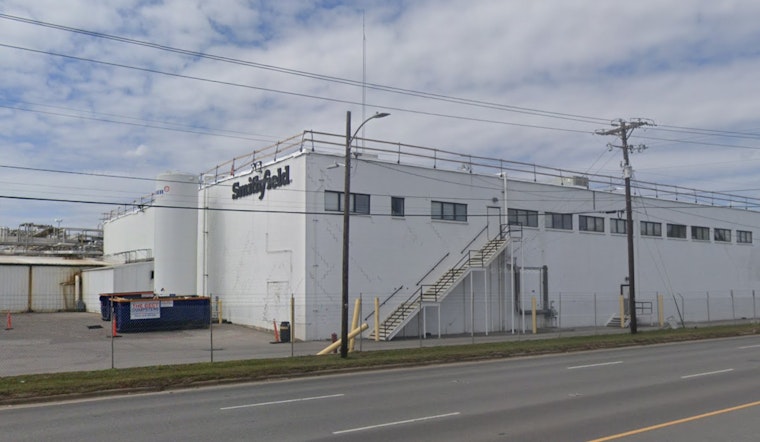
Fortrex, the food-plant sanitation contractor, is losing its Smithfield Foods contract at the Clinton, North Carolina, plant, a decision the company says will wipe out more than 100 sanitation jobs and leave workers scrambling to figure out what comes next. It is the latest in a string of sudden contract changes that have already forced Fortrex to shrink crews at several other plants in recent months.
According to Triangle Business Journal, Fortrex filed notice with state officials about the Clinton contract coming to an end and said the move will affect more than 100 employees there. The filing follows the standard process companies use to alert workforce agencies so they can start lining up transition help for displaced workers.
The Clinton hit follows closely on other contract losses. Fortrex previously reported it would end services at a Mountaire plant in Siler City, affecting about 170 workers, and it filed a WARN notice after Tyson Foods terminated a sanitation contract in Lexington, Nebraska, impacting roughly 139 employees. Taken together, those late 2025 and early 2026 filings show how quickly contractor-dependent jobs can disappear when big processors decide to switch vendors.
Company notices and worker options
In earlier notices, Fortrex told state rapid-response coordinators that affected employees were notified and that eligible workers would be offered transfers or the chance to apply with the new sanitation providers taking over the contracts. "Mountaire is transitioning to another provider for our sanitation services," Mountaire spokeswoman Catherine Bassett told WRAL, describing the Siler City change and confirming that a replacement vendor is on deck.
Why sanitation contracts flip
Sanitation work at meat and poultry plants is routinely put out to bid, and processors can change vendors for cost, scheduling, or operational reasons. It is a business model that gives plant operators flexibility but leaves sanitation contractors and their crews exposed to sudden transitions when a customer makes a different choice.
Industry coverage notes that Packers Sanitation Services (PSSI) rebranded as Fortrex as the company expanded, but the underlying setup did not change much. The business still depends on individual plant contracts that can flip quickly when processors go shopping for a new deal. That structure helps explain why the same contractor can report multiple, scattered layoffs in a short time span, even across different states and companies.
Legal notes
Large contractor layoffs and contract terminations often trigger notices under the federal WARN Act and related state rapid-response rules, which are designed to speed up re-employment and training help for displaced workers. Fortrex's WARN letter to the Nebraska Department of Labor, filed Nov. 26 in the Lexington case, shows the company notifying officials about planned layoffs and outlining transfer-offer language and HR contacts for impacted employees. Similar notices are the paperwork that allows states to coordinate Rapid Response services.
State and local workforce boards typically use those notices to organize Rapid Response meetings, hiring events, and training referrals so displaced plant workers can connect to new jobs or upskilling programs. The North Carolina Department of Commerce explains that Rapid Response teams and local NCWorks centers work with both employers and workers after WARN notifications, aiming to deploy career services and training resources as quickly as possible when a layoff hits.





