

























































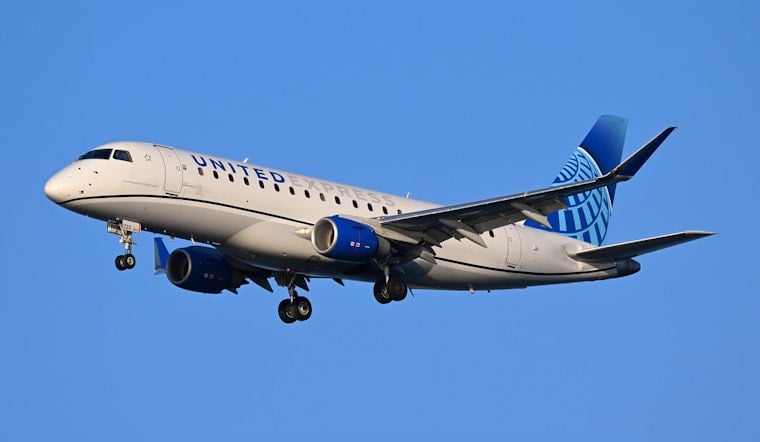
A smoking battery on a passenger's device abruptly sent a United Express regional jet off its planned route Wednesday, prompting the crew to divert to San Antonio instead of continuing on to Houston. The flight, operated by Mesa Airlines, had been heading from Lubbock to George Bush Intercontinental Airport when the crew declared an in-flight emergency. The aircraft landed safely, and officials reported no injuries.
What happened
Pilots of United Express flight 6110, operated by Mesa Airlines, declared an emergency while en route from Lubbock to Houston, according to FlightRadar24. A passenger's device battery began smoking, and the crew diverted to San Antonio instead of continuing to Houston. The jet landed without incident in San Antonio, an airline spokesperson told KPRC Click2Houston. Mesa Airlines said its teams were assisting customers and working to get passengers to their final destinations.
Why lithium batteries can be dangerous
Lithium-ion batteries can experience a failure known as thermal runaway, in which rising internal temperatures cause a cell to vent flammable gases and ignite, according to the FAA. That chain reaction can be triggered by manufacturing defects, physical damage, overcharging, or short circuits. The risks increase in confined spaces such as carry-on bags or overhead bins, where heat and smoke are harder to dissipate. The FAA maintains detailed guidance and training materials for airline crews and shippers on how to contain and respond to these incidents.
Airline response and passenger impacts
Mesa Airlines told KPRC Click2Houston that its teams were assisting customers and handling rebooking for travelers affected by the diversion. Although they tend to rattle nerves, diversions for smoke or fire concerns are standard safety moves that let ground crews inspect the aircraft for any lingering hazards before it is returned to service. Passengers with tight connections are typically advised to monitor airline notifications or airport apps for updated rebooking information.
What passengers should know
The FAA's PackSafe guidance urges travelers to keep damaged or recalled batteries out of both carry-on and checked bags, to pack spare batteries in carry-on luggage only, and to alert cabin crew immediately if a device overheats or starts to smoke. According to the FAA, crew training and established procedures are designed to contain smoke events and protect passengers until an aircraft can be inspected or, if necessary, diverted. Passengers who were on this flight are advised to watch for follow-up messages from the airline about their next steps.
As of Wednesday afternoon, officials had not released additional details about what caused the battery to fail, and airline and federal agencies may share more information after inspections or any further inquiries. We will update this post if authorities publish new details.



_Embraer_175_N723YX_on_final_approach_to_Boston_Dec_2024_1.jpg)