

























































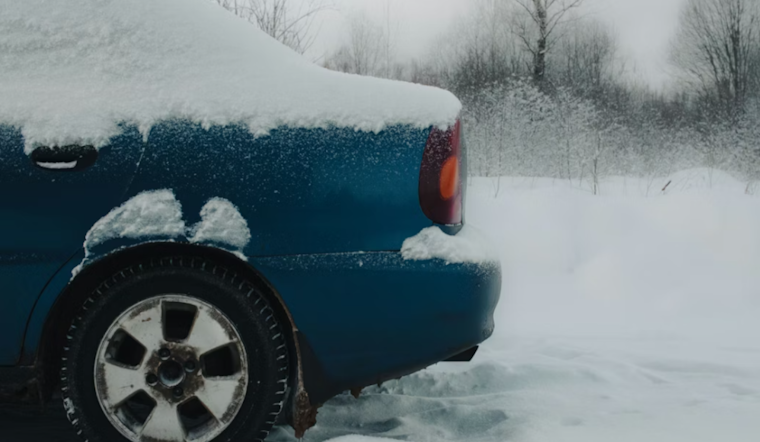
Annapolis, Maryland, lawmakers have turned a wintertime “nice to do” into a legal must-do, approving a new safety law that requires drivers to clear snow and ice from their vehicles before hitting the road. The move picked up speed after a Jan. 28 incident on Route 97, when a sheet of ice flew off another vehicle and smashed through the windshield of an Anne Arundel County deputy sheriff’s cruiser, injuring the officer. Lawmakers say they want to keep those airborne ice slabs from turning highways into obstacle courses.
The measure, dubbed the Clear Before You Drive Act, cleared the General Assembly this month, according to The Daily Record. Lead sponsor Del. Edith Patterson said legislators were aiming at both basic visibility and the danger posed when frozen chunks go flying.
What the law requires
Under HB 474, drivers have to make reasonable efforts to remove built-up snow and ice from exposed vehicle surfaces before operating or towing a vehicle, according to the bill text. That list covers hoods, trunks, windshields, every window, roofs, truck cabs, and the tops of trailers. The law carves out exceptions if clearing the vehicle would violate workplace-safety rules or endanger the operator’s health, and it limits enforcement so the same vehicle cannot be cited more than once in any 24 hours.
The measure sets up escalating fines. Noncommercial drivers can be hit with penalties that start at $25 for a first offense and rise to $200 for a fourth or later violation. Commercial carriers face fines that begin at $75 and climb to $1,000 for repeat offenses. When ice contributes to property damage or serious bodily injury, the law raises maximum fines to $200 to $1,000 for noncommercial drivers and $500 to $1,500 for commercial operators. The bill is scheduled to take effect Oct. 1, 2026, according to the Maryland General Assembly.
Trucking industry warns of practical limits
The Maryland Motor Truck Association told legislators that actually getting all that snow and ice off big rigs is not as simple as it sounds. In written testimony, the group said that climbing on trailers to clear snow is often unsafe and that there are few reliable tools for removing snow from the tops of trailers. The group says it worked with Del. Patterson to secure language that acknowledges those practical limits, including safety carveouts and the single‑citation limit meant to balance trucker safety with overall roadway safety, according to Maryland Motor Truck Association testimony.
Enforcement and what it means legally
The statute is written so that enforcement is generally secondary, meaning officers can issue citations when they have already stopped a driver for another suspected offense. A different story unfolds if uncleared snow or ice helps cause a crash. In that scenario, failing to clear the vehicle becomes a more serious violation with stiffer penalties.
That setup is intended to give police some discretion while giving prosecutors and courts a clearer structure for penalties when icy debris damages property or injures someone. Supporters say the mix of education, exemptions, and increasingly steep fines is designed to prevent harm without encouraging officers to pull people over at random, an approach reflected in the final bill language.
For everyday drivers, the message is pretty simple: clear the hood, roof, and every window before you roll. With the law not kicking in until Oct. 1, fleet managers and solo motorists alike have time to build the new requirement into winter routines before tickets start flying faster than the ice.





