

























































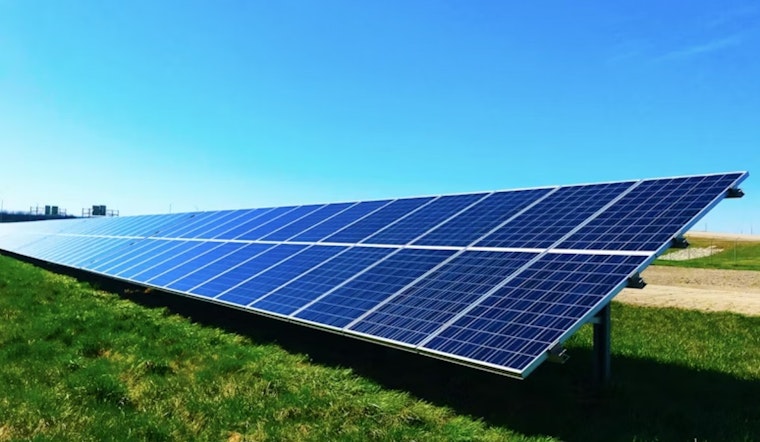
Richland County is gearing up for a fight over the future of its fields and its power grid, as local labor and advocacy groups rally to overturn a countywide ban on industrial-scale solar.
Backed by the International Brotherhood of Electrical Workers Local 688, organizers have launched a campaign ahead of a May primary referendum that could reopen the door to big solar projects across the county. They are pitching the vote as a choice about jobs, tax revenue and long-term energy security, not just rows of panels on farmland. A town hall in Madison Township on March 28 is the next big chance for residents to sound off.
As reported by News 5 Cleveland, the current fight can be traced back to Ohio Senate Bill 52, which gave county commissioners the authority to decide whether solar farms could be built in unincorporated townships. Commissioner Darrell Banks sent a letter to all 18 townships asking if they wanted a ban, and 11 of them said yes in July 2025. Local organizers and IBEW Local 688 are now pushing a countywide referendum that would make industrial solar legal again if it passes.
Richland County's official website lists Darrell Banks as one of three elected county commissioners, confirming his place at the center of the dispute. County commissioners are the officials who can implement or respond to township-level zoning choices, and their decisions play a key role in whether large energy projects move forward in unincorporated areas. That local-control setup is a big reason the issue is now in voters' hands.
What voters will decide in May
On the May primary ballot, residents will be asked whether industrial-scale solar should be allowed countywide. If the measure passes, large solar farms could be proposed anywhere in the county, but every project would still have to clear a case-by-case review, organizers say.
"We just want everybody to make an educated decision," Brian McPeak of IBEW Local 688 told News 5 Cleveland. McPeak and his allies argue that solar fields can be built in roughly two years and that payments from those projects would flow directly to townships, schools and fire departments.
Arguments and stakes
Supporters of lifting the ban point to potential job creation, fresh revenue for local taxing districts and a faster buildout of new power capacity compared with coal or nuclear projects. To them, the referendum is less about politics and more about paychecks and local budgets.
Opponents, including township trustees cited by county commissioners, counter that they are trying to protect farmland and keep industrial-scale solar fields from creeping too close to homes. They see the ban as a crucial tool for safeguarding rural character.
The back and forth mirrors a broader debate playing out across rural Ohio over land use, clean energy development and how much authority trustees and commissioners should have over large-scale projects that can reshape local landscapes.
Next steps
Organizers have circled the Madison Township town hall on March 28 as a key moment to field questions and calm fears before early voting and the May primary kick into high gear. They are treating it as both a public-information session and a test of how much appetite there really is for industrial solar.
If voters sign off on the referendum in May, countywide policy would shift in favor of allowing industrial-scale solar, yet each proposed project would still need to pass through standard regulatory review and local permitting processes. The result will help determine how Richland County balances preserving farmland with welcoming new energy development in the years ahead.


