

























































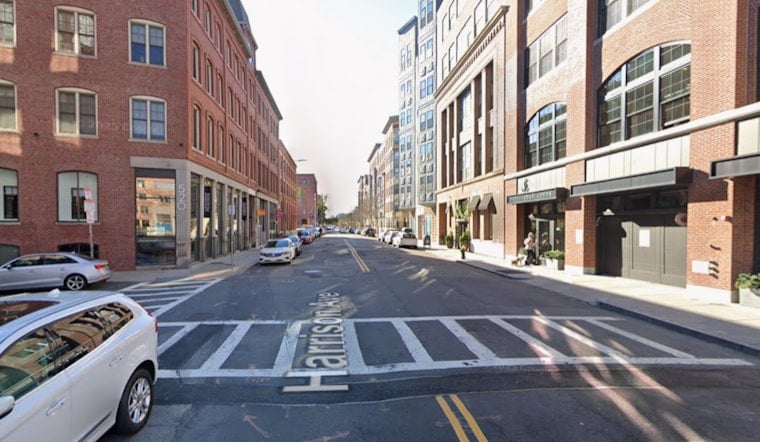
In Boston’s South End, a bad-blood fight between neighboring developers has turned into a legal slugfest with a potential price tag close to $20 million, and it still may be far from over.
The decade-long feud centers on projects next door to the Jordan Lofts at 477 Harrison Ave., where plaintiff 477 Harrison Ave., LLC says rival developer JACE Boston, LLC and its principal, Arthur Leon, mounted a years-long barrage of zoning appeals, a criminal complaint, and other filings aimed at stalling the project. A Suffolk County judge has now supercharged a jury verdict on abuse of process, lifting base damages to more than $11.6 million. With statutory interest and attorneys' fees that have piled up over roughly 11 years of litigation, lawyers say the total exposure could climb toward $20 million. The defendants, for their part, insist much of what they did was constitutionally protected petitioning and have signaled they will take the fight upstairs on appeal.
Verdict and judgment
A Suffolk County jury in May sided with 477 Harrison and awarded $5.8 million on an abuse-of-process claim. Superior Court Judge James H. Budreau later found willful Chapter 93A violations and doubled that number to $11.6 million.
Budreau also ordered statutory interest and attorneys' fees which, when calculated across more than a decade of trench warfare in the courts, could drive the total financial hit close to $20 million, as reported by Massachusetts Lawyers Weekly.
Long legal pedigree
This dispute has already made more trips to the state’s highest court than most developers will see in a lifetime. The case has twice landed before the Supreme Judicial Court in recent years, producing rulings that reshaped how Massachusetts courts handle anti‑SLAPP and abuse‑of‑process claims.
Those SJC decisions sent parts of the case back for further proceedings and clarified how far parties can go with counterclaims that focus mainly on recovering attorneys' fees, as detailed by the Supreme Judicial Court.
Defendants' appeal pitch
The defense has already previewed its next move. Counsel have told the press they expect to appeal, arguing that the challenged filings were part of a legitimate effort to petition city government and protect property rights, rather than a scheme to weaponize the courts.
That argument raises First Amendment and Noerr‑Pennington issues. First Amendment specialists say any appeal could test how far petitioning immunity stretches when a trial court has found that the conduct carried an illegitimate ulterior motive, as reported by Massachusetts Lawyers Weekly.
Local fallout and project history
On the ground in the South End, the fight has not been just academic. John Holland, the developer behind the Jordan Lofts at 477 Harrison, testified that the wave of appeals and related filings forced design changes, wiped out planned residential units, and at one point put the project’s financing at risk. According to that testimony, the pressure pushed him to the brink of bankruptcy.
Banker & Tradesman framed the saga as a case study in how rival developers can use legal tactics to slow a competing project, even as it noted that the Jordan Lofts condos ultimately opened in 2016.
What to watch on appeal
If the defendants follow through and file a full appeal, appellate judges will likely be asked to decide how tightly the First Amendment shields petitioning activity from tort liability. One key question is whether that protection drops away only under a strict "sham" litigation standard, where the conduct is objectively baseless, or if a broader approach applies.
The appeal could also pull the Supreme Judicial Court back into the mix to refine its recent guidance on anti‑SLAPP practice and to address whether Massachusetts should extend Noerr‑Pennington‑style protections beyond the antitrust context, an issue the high court has already begun to tackle in earlier decisions such as the one linked above.
For South End neighbors and local builders, the case is a warning that zoning battles can turn into multi-year grudge matches with eye-watering costs. For lawyers, it is shaping up as a closely watched test of where petitioning immunity ends and tort liability begins. Defendants are expected to file formal appellate papers in the coming weeks, potentially sending the case to the Appeals Court and, if history is any guide, back to the SJC for yet another round.





