

























































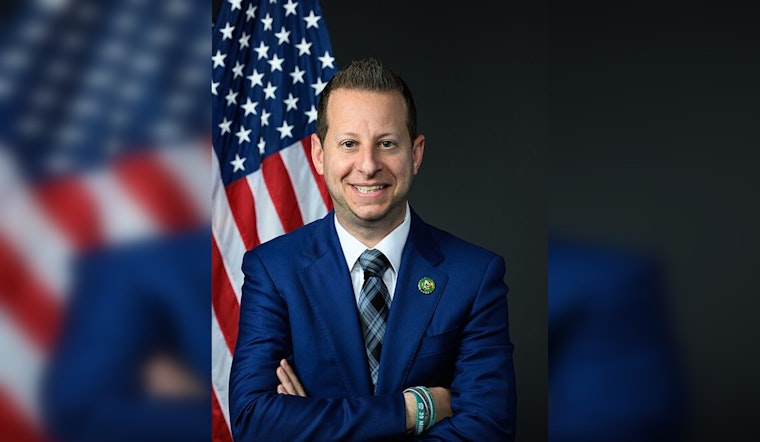
Rep. Jared Moskowitz (D-Fla.) used a March 17 House subcommittee hearing to blast the Pentagon’s books, telling witnesses that “there's over two and a half trillion dollars missing in the Pentagon” and demanding straight answers on failed audits and murky accounting. The tense exchange, during an Oversight and Intelligence session that was supposed to center on foreign assistance, quickly widened into a broader indictment of Defense Department financial management. The moment is adding fuel to a long-running fight in Washington over whether the Pentagon can truly track what it owns as Congress weighs major defense spending, as reported by Tampa Free Press.
Moskowitz's examples and the hearing
Pressing his point, Moskowitz rattled off eye-catching examples he said highlight the problem, including a $100,000 Steinway piano, $220 million in furniture and $9 million in crab legs, then asked whether the Department of Defense is ever held to the same standards as smaller agencies, according to the Tampa Free Press. Sitting at the witness table, Adam Kaplan, an associate deputy inspector general, told lawmakers that “maximum oversight is essential” when billions are pushed out into complex overseas environments. His written testimony is posted by the USAID Office of Inspector General. The subcommittee’s briefing materials and video of the hearing are available through the House Foreign Affairs Committee site.
How big is the gap?
Moskowitz used the “two and a half trillion” figure as shorthand for assets that auditors have struggled to substantiate during repeated department-wide audit attempts. A Government Accountability Office review identified material weaknesses tied to about $2.1 trillion of the Pentagon’s reported assets on the fiscal year 2024 balance sheet, while the department’s own FY2024 financial statements list roughly $4.1 trillion in total assets. Auditors say the huge mismatch mostly stems from legacy IT systems and missing transaction-level detail that complicate consolidation and verification, not from literal piles of cash suddenly vanishing.
Audit history and what it means
For the FY2024 audit, examiners issued a “disclaimer of opinion,” concluding that the Department of Defense “could not obtain sufficient, appropriate evidence” to support its consolidated financial statements, according to GAO analysis. In accounting terms, that means auditors could not verify the books, rather than a formal finding that money was stolen. Some parts of the department have shown improvement, with the Marine Corps recently earning an unmodified opinion, but the Army, Navy and Air Force still carry much of the asset balances that auditors have flagged. Watchdogs warn that without major modernization of financial systems and tougher internal controls, progress will remain piecemeal instead of definitive.
What Moskowitz wants and what could follow
Moskowitz told the panel he was not calling for the Pentagon to be dismantled, but argued that the department should be subject to the same kind of audit scrutiny routinely demanded of smaller agencies, a point noted by the Tampa Free Press. The timing is critical, as Congress is already wrangling over sizable defense spending packages, and the latest audit results give lawmakers fresh leverage to push for tighter oversight or more concrete cleanup plans. For now, Defense Department leaders are under pressure to lay out clear timelines and measurable milestones if they hope to quiet calls for deeper structural reforms.
What to watch next
In the coming weeks, watch for follow-up hearings, new GAO reviews and updates on Pentagon remediation efforts, with the House committee using its public calendars and the March 17 record to track movement. Observers say the big question is whether Moskowitz’s alarm turns into specific oversight actions and binding requirements, or whether it stays in the realm of pointed rhetoric and viral clips from the hearing room.



