

























































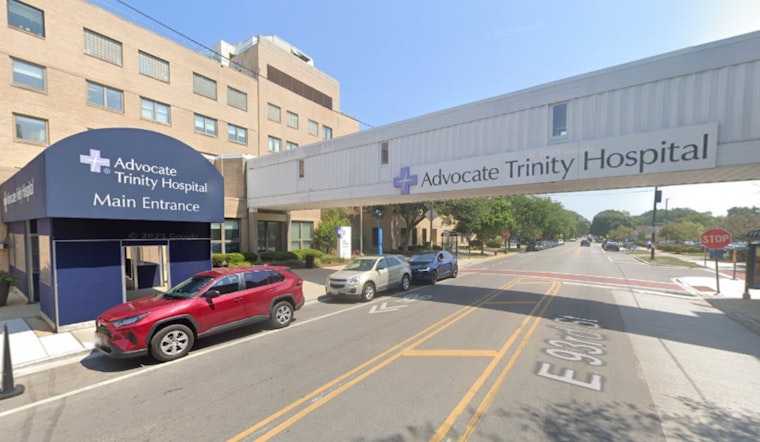
The Chicago Plan Commission has signed off on a major health care shake-up on the Far South Side, voting on March 21, 2026, to approve a new Advocate Trinity Hospital at 8000 South Lake Shore Drive in the Illinois Quantum and Microelectronics Park. The five-story, technology-forward facility is designed to replace the aging Trinity campus on 93rd Street and to serve as the hub for a broader network of neighborhood clinics and services. Hospital officials say the project is meant to modernize inpatient care while expanding outpatient and community-based health programs across the South Side.
What the Plan Commission approved
According to Chicago YIMBY, the Plan Commission backed a five-story, roughly 183,000-square-foot hospital planned for the eastern edge of the Quantum Park site. The design places about 36 medical beds on three upper floors, stacked above two lower levels that would house a 16-exam-room emergency department, an ICU, a dialysis unit, a catheterization lab, and three operating rooms, along with imaging and gastrointestinal labs and an observation unit.
The proposal also includes roughly 368 parking spaces, a metal-panel exterior with large floor-to-ceiling windows, and a small patient garden. Chicago YIMBY reported a roughly $800 million cost for the hospital itself and a $1 billion buildout for the broader Advocate campus planned at the site.
Funding and capacity
Advocate Health has pitched the project as a cornerstone of a $1 billion South Side investment that combines neighborhood care sites, workforce initiatives, and a new state-of-the-art hospital. As outlined by Advocate Health, the system has pledged to preserve jobs at the current Trinity campus while hiring additional staff across the region.
In a December 2024 release, Advocate Health described roughly $300 million going toward the new hospital building and listed a 52-bed layout, including 36 surgery beds. That bed count has shifted in the course of subsequent design and regulatory review, as the project team has refined the small-format replacement concept.
Official filings and timeline
On the regulatory side, state records show the project moving through Illinois oversight. The Illinois Health Facilities and Services Review Board posted an establishment notice for Advocate Trinity Hospital (project #25-003) describing a 40-bed, small-format replacement facility and listing a project cost of $319,557,482, according to the Illinois HFSRB.
Minutes from the Illinois Quantum & Microelectronics Park board captured an Advocate presentation that projected the new hospital would be ready to receive patients in early 2029, with those minutes posted on the IQMP agenda page. That target will depend on how smoothly the remaining approvals, permitting, and construction phases play out.
Local impact and reaction
City officials and community leaders have framed the new hospital as a key move toward addressing long-standing health inequities on the South Side while spurring jobs and broader neighborhood investment. WTTW reported Advocate’s pledge to retain existing teammates and hire roughly 1,000 additional staff across the South Side, along with plans to grow outpatient services.
Local elected leaders have lined up in support of the plan, arguing that a modern replacement for the 93rd Street campus is overdue. Community organizations, while largely welcoming the investment, have been clear that they intend to keep pressing for enforceable commitments on local hiring and contracting, as well as a detailed plan for reusing the 93rd Street property once hospital operations shift to the new site.
What to watch next
With Plan Commission approval in hand, the project now heads into the less glamorous but crucial stages of permitting, procurement, and site remediation before any large-scale construction starts. Developers and Advocate representatives have said they are aiming to have the new hospital and surrounding campus open and operational by 2029, in line with the timeline presented to the IQMP board.
Key checkpoints to watch in the coming years include building-permit applications, any remaining city approvals, updated Illinois HFSRB staff reports, and the first waves of community hiring and outreach tied to the buildout. As the team moves from renderings and board votes to cranes and concrete, we will be tracking public filings and community briefings to see how closely the project sticks to its promises on services, jobs, and timeline.





