

























































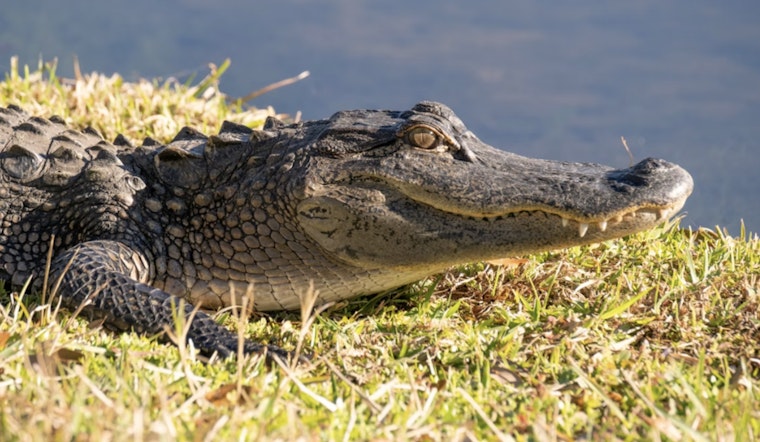
A sun-loving alligator caught on video in Galveston this week is serving as a seasonal reminder that spring means more gators on the move across the Houston area. Anyone living near bayous, retention ponds or neighborhood lakes should expect to see them a bit more often as the reptiles shake off winter and get active again.
The clip, shared by KHOU, shows a gator gliding along the Galveston shoreline. That short video joins other recent reports from around the Upper Texas Coast and has prompted officials to repeat their usual springtime safety reminders.
Why You Are Seeing More Gators Now
The Texas Parks and Wildlife Department notes that “March 1 through May 30 is the peak time for breeding and nesting,” which helps explain the spike in sightings. As alligators emerge from brumation in early March, females usually stay closer to nesting spots, while males and younger gators roam farther afield. TPWD also cautions that extreme weather, whether drought or heavy rain, can push alligators into areas where people are more likely to run into them. For more on their behavior and seasonal patterns, see the Texas Parks and Wildlife Department.
Where You Are Most Likely To See One
Some of the most reliable gator hangouts sit just beyond the city. Brazos Bend State Park is routinely flagged as a major alligator hotspot and is estimated to host more than 250 gators, according to the Houston Chronicle. Inside the metro area, slow bayous, neighborhood retention ponds and golf-course lakes are your best bet for a sighting. The City of Galveston also notes that gators sometimes slip into the surf for a few hours to help rid themselves of parasites.
What To Do If You Spot A Gator
Give any alligator plenty of room, at least 30 feet, keep pets on a leash and never feed or try to move a wild gator. If an alligator appears to pose a threat or starts approaching people, officials advise contacting local animal control or Texas Parks and Wildlife. A recent Galveston report cited guidance to call TPWD at 281-842-8100 for problem animals. For non-threatening encounters, the Houston Humane Society recommends keeping children and pets away and reaching out to TPWD if the animal is in a small pond or otherwise acting as a nuisance.
Legal And Safety Notes
Feeding or baiting free-ranging alligators is both dangerous and illegal in state parks and other areas, and Texas Parks and Wildlife materials make it clear that offering food or bait is hazardous and prohibited. The City of Galveston likewise stresses that people should never feed or approach alligators and should report nuisance animals to authorities so trained crews can handle them safely.
Spring is the busiest time of year for alligators along the Upper Texas Coast, and most encounters stay uneventful as long as people give the animals space and follow official guidance. For more detail on safety and reporting, local park pages or your game warden can provide the most current advice.





