

























































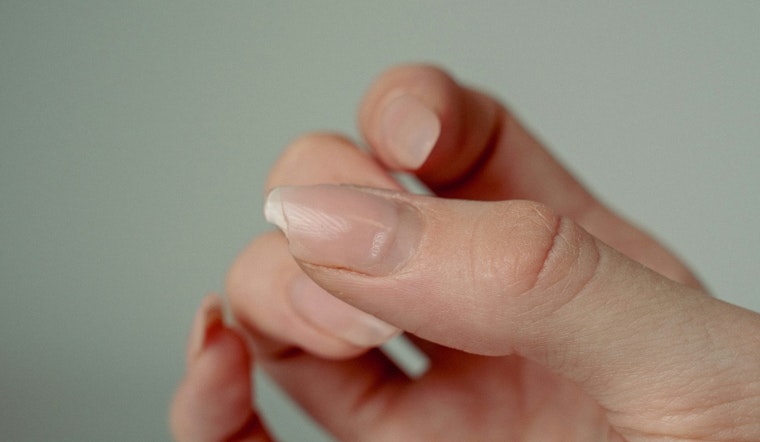
A Texas Tech research team says simple fingernail clippings can quietly hold a chemical "signature" of fentanyl exposure for months, and that machine learning tools can pull that signal out of complex spectroscopic data. Their proof-of-concept work, which reads molecular changes in nail keratin using ATR-FTIR and Raman instruments, was recently laid out in a study and showcased at a national spectroscopy conference. If it holds up, the approach could give clinicians and forensic labs a noninvasive way to look further back in time than standard blood or urine tests.
From Pittcon To The Lab
At Pittcon 2026 in San Antonio, Dr. Lenka Halámková of Texas Tech walked through a multimodal workflow that combines Raman and ATR-FTIR scans of human nail clippings with classification algorithms to separate donors who had fentanyl exposure from those who did not, according to Spectroscopy Online. Her team also linked those spectral "fingerprints" to enzyme-inhibition experiments on butyrylcholinesterase, suggesting a possible route by which fentanyl analogues might tweak protein structure and the keratinization process as nails grow.
What The Peer-Reviewed Paper Measured
In a peer-reviewed methods paper in Sensors, the group analyzed ATR-FTIR spectra from nail clippings collected from 79 donors, including 63 controls and 16 donors with known fentanyl exposure. They trained multivariate classifiers to tell the two groups apart. According to the authors, a PLS-DA model cleanly separated donors in the study set with no misclassifications and reached roughly 82 to 85 percent accuracy on spectrum-level external validation, while cautioning that the spectral changes are subtle enough that algorithms are needed to reliably spot them.
Why Nails Can Extend The Detection Window
Because nails grow slowly and lock metabolites and parent compounds into a keratin matrix, they can preserve a record of drug exposure longer than blood or urine, and collecting clippings is both noninvasive and easy to ship. Commercial toxicology labs report that fingernail samples can reflect use over a period of months, commonly described as roughly three to six months depending on the substance and individual factors, according to USDTL.
Promises And Limits
The Texas Tech team is quick to stress that this is still early-stage work. The number of fentanyl-positive donors in the study is small, the relevant spectral bands from lipids and keratin overlap, and pulling fentanyl apart from closely related analogues in those spectra is a serious challenge, so more validation will be required. Meanwhile, other groups are chasing complementary, field-ready tools such as machine-learning-assisted SERS chips designed to detect and quantify fentanyl in drug samples, pointing to multiple technological paths toward faster detection, according to npj Nanophotonics.
Legal And Forensic Questions
Turning nail spectroscopy into something courts or hospital systems can actually rely on will demand standardized protocols, inter-laboratory validation, and appropriate reference materials so that results are both reproducible and defensible. National bodies such as the National Institute of Standards and Technology have been building spectral libraries and reference materials to help labs consistently identify fentanyl and its analogues, reinforcing the idea that orthodox confirmatory chemistry will remain a backbone of testing, according to NIST.
What’s Next
Halámková’s lab points to larger clinical cohorts, cross-laboratory comparisons, and experiments that include a broader range of fentanyl analogues and dosing histories as the next steps, and Texas Tech has posted summaries of the continuing work. If those larger studies echo the early results, spectroscopic nail screening could fill a role as a rapid triage or monitoring tool, while confirmatory LC/GC-MS testing remains the legal and clinical standard, according to Texas Tech.





