

























































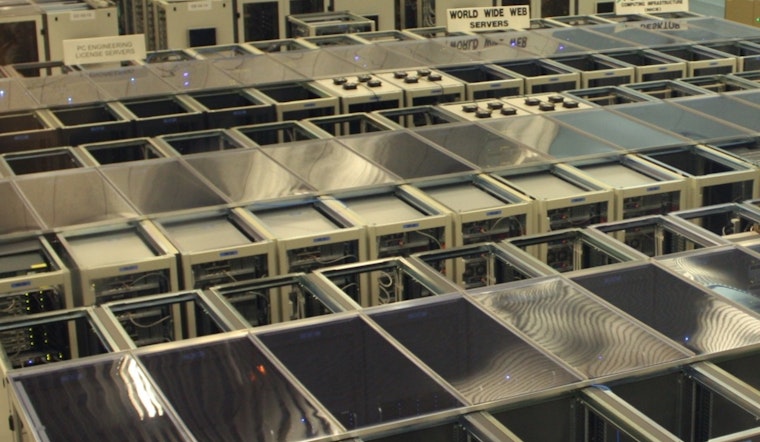
Thirty planned data centers along the Ocmulgee River are lining up for millions of gallons of water a day, threatening fresh strain on drinking supplies and river ecosystems across central Georgia. Many of the projects are proposed upstream of Macon and are advancing through county zoning approvals and utility commitments even as planners and watershed advocates say they do not yet have a full tally of future demand. That combination of rapid buildout and partial disclosure has residents and local officials weighing promised tax gains against the risk of long-term water stress.
According to the Macon Telegraph, 30 data centers are planned in the Ocmulgee basin; 16 of those have disclosed projected water use through state Development of Regional Impact filings. Taken together, those 16 would draw about 12 million gallons per day and return roughly 3.16 million gallons. Advocates calculate that more than 9 million gallons per day would be consumptively lost from the basin under the disclosed projects, with 14 other planned sites yet to publish estimates. The patchwork of disclosure leaves the basic question hanging in the air: who is tallying the full future demand on the river.
Permitting rules create a gap
Georgia requires a state permit for users who withdraw, on a monthly average, more than 100,000 gallons per day, but that process is aimed at direct surface-water or well withdrawals, not customers buying water from a municipal system. Under Georgia's surface-water rules, the municipal utility holds the source permit and can serve large industrial customers without those customers applying separately for a state surface-water withdrawal permit. The result is that hyperscale facilities tied into a city network can avoid the separate industrial permitting that would normally force public disclosure of how much they withdraw, how much they return and what that means for the river.
Local votes become the practical check
That regulatory setup shifts the real power to county commissions and city councils, where zoning votes and utility commitment letters have become the main levers to slow or stop a project. As GPB reported, opponents in Twiggs County and elsewhere say projects are moving forward even while state-level disclosure and review lag behind. For many residents, the tradeoff is blunt: take the short-term pitch of new tax revenue and jobs or play defense on streamflows and fisheries that downstream communities may rely on for decades.
How thirsty can a data center be?
Water use depends heavily on cooling design. The Environmental and Energy Study Institute notes that large, evaporatively cooled facilities can use as much as 5 million gallons per day at peak. By contrast, the 2023 Middle Ocmulgee regional plan models total basin withdrawals of roughly 280 million gallons per day by 2060, a planning baseline that did not anticipate the current wave of hyperscale builds. That mismatch means even a handful of large sites can shift the basin’s demand picture in a hurry.
The power-plant wildcard
The regional plan had assumed that retirements at Georgia Power’s Plant Scherer would free up river water. But the utility’s 2025 Integrated Resource Plan asks regulators to keep Unit 3 operating into the mid 2030s, according to the company’s filings. Adding Scherer’s continued withdrawals, on the order of 71.5 million gallons per day, to the plan’s baseline and to the disclosed data center demand pushes modeled withdrawals toward roughly 364 million gallons per day. That combined scenario, along with reporting that flows dipped below that level on many days last year, is what watershed advocates say signals that the river may not reliably meet every projected demand without changes in siting, technology or oversight. (Southern Company.)
What lower flows mean for fish and people
Lower summer flows warm the river and reduce dissolved oxygen, conditions that stress species such as redhorse and sturgeon and can make shoals impassable during migration seasons. Georgia’s water quality standards include numeric dissolved oxygen criteria for warm-water fisheries, which is one reason in-stream flow protections carry so much weight in ecological reviews and permit decisions. Reduced flows can also eat into the safety margin at municipal intakes, leaving downstream communities more exposed in drought months. Federal and USGS guidance documents describe how altered flow regimes reshape aquatic habitat and cut into the water available for human use.
Industry response and possible fixes
Data center operators and water engineers point to a toolkit that can sharply reduce potable water demand. Reclaimed or recycled water for cooling, closed-loop liquid cooling systems and air-side economizers can all limit evaporative losses compared with open cooling towers. Amazon and other firms highlight investments and pilots for water reuse and efficiency on their public sustainability pages, and industry researchers say those shifts can shrink a site’s daily potable footprint. Still, conversion takes time and money, and it does not replace the value of transparent, basin-level accounting before projects receive a green light.
For now, the hard choices land squarely with local officials and utility boards: who wins access to scarce river flows and under what conditions. Until there is a single, transparent tally of future withdrawals, central Georgia is left juggling economic promises against a river system whose seasonal lows are already baked into official planning models.




