

























































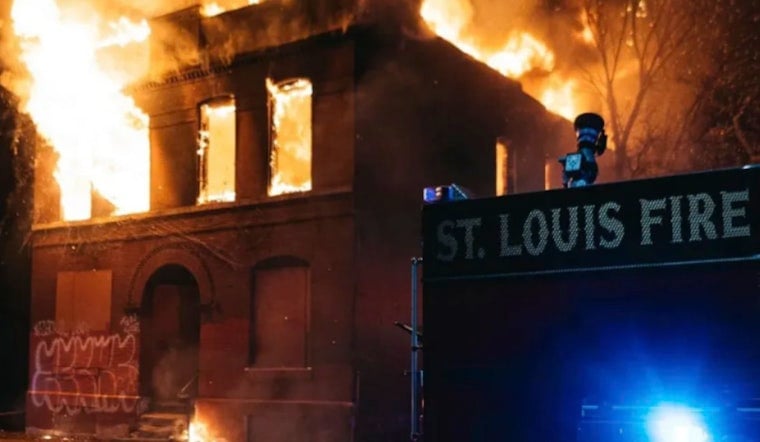
The small yellow house on Gustine Avenue that once belonged to Kaitlynn Picker’s family went up in flames in the early hours of Jan. 12, leaving neighbors stunned and the block smelling like smoke. Fire crews arrived to find heavy flames pouring from the second floor of the vacant home and confirmed no one was inside. For residents who had watched the property slide into years of neglect, the blaze did more than destroy an old building; it erased a place packed with family history and underscored a familiar safety problem across St. Louis: empty houses that attract trespassers and turn into neighborhood hazards. The loss has renewed calls for clearer accountability and faster action on dangerous vacant properties.
City records and neighbor accounts reviewed by First Alert 4 show the Gustine Avenue house was built in 1892 and was owned by Daniel Baumhoff LLC after a 2018 private sale for roughly $8,000. The station reports that forestry fines and code violations piled up while property taxes for 2024 and 2025 remained unpaid (about $1,889), and neighbors say surveillance footage shows someone entering the house hours before the Jan. 12 fire. Taken together, those public records and eyewitness details trace a now-familiar arc that city leaders and residents say keeps turning individual vacant houses into public dangers.
Daniel Baumhoff told the station the property was intended as a fix-and-flip but that he had “a lot of squatting issues” and that other projects took priority. Neighbors pushed back, saying they repeatedly messaged and called the owner to mow, board windows or otherwise secure the place. “To own a building and not seriously board it up to make it impossible for somebody to get in is negligence,” one neighbor said, voicing a complaint heard on blocks across the city that are dotted with similar vacant homes.
Why vacant houses become fire hazards
Vacant buildings often lose utilities, fall into disrepair and become easy shelter for people trying to stay warm, conditions that increase the risk of improvised heating and accidental blazes. Insurance and fire-safety experts warn that makeshift heaters, open flames and overcrowded spaces inside uninspected structures can spark fires that spread quickly in tightly packed neighborhoods. In response to deadly incidents, the fire department has moved to catalog and rate vacant properties so crews know which buildings are too unsafe to enter.
As reported by FireRescue1, that door-to-door assessment program followed the 2022 death of Firefighter Benjamin Polson and is intended to reduce the risk that crews will go inside unstable structures. The circumstances of Polson’s death and subsequent litigation remain a painful reminder of the stakes. Firefighter Close Calls and local reporting detail how that 2022 line-of-duty fatality prompted new safety work by the department.
A citywide problem, not an isolated loss
Vacancy in St. Louis is systemic: community researchers and city data estimate more than 10,000 vacant buildings across the city, and related unpaid taxes, forestry fees and fines run into the millions. That backlog leaves properties in limbo, too costly or complicated to rehab and too dangerous to ignore, creating persistent safety and fiscal pressure for neighborhoods and first responders. Reporting with local partners has tracked how owners can let fees mount while properties sit, and how that dynamic often leaves neighbors to shoulder the consequences. Type Investigations and partner coverage lay out the scale of vacancy and unpaid obligations in St. Louis.
How the tax-sale pipeline works
Missouri law allows a tax lien to be foreclosed after a tax bill has gone unpaid for two years, but court backlogs and local practice often stretch the real timeline in cities like St. Louis. The statutory framework is set out in state law; see Missouri Revised Statutes §141.260 on Justia for the foreclosure provision. In practice, city officials and neighbors say properties can sit for years while new taxes, fees and fines accumulate, and the sheriff’s office, which runs tax-sale auctions, warns bidders they must research parcels before buying because not every risk, such as ongoing squatting, is publicly disclosed. That gap between legal remedies and on-the-ground conditions helps explain why some vacant houses linger until they become outright safety hazards.
What neighbors and officials say should change
For people who grew up in the Gustine house, the loss is deeply personal; for the neighborhood, it is another entry in a long list of public safety problems with repeat victims. Residents and advocates are calling for faster enforcement on the worst properties, clearer requirements for securing vacant buildings and targeted demolition or stabilization funded by city and nonprofit programs. Officials say limited resources and court timelines complicate those fixes, but neighbors argue that better data sharing, stricter boarding standards and swifter action on tax-delinquent properties would reduce risks to both residents and firefighters.
The Gustine Avenue fire is a reminder that vacant properties are not just eyesores; they can become active threats. Neighborhoods, local reporters and public agencies will be watching to see whether policy and practice change fast enough to keep another family memory from turning into another dangerous ruin.





