

























































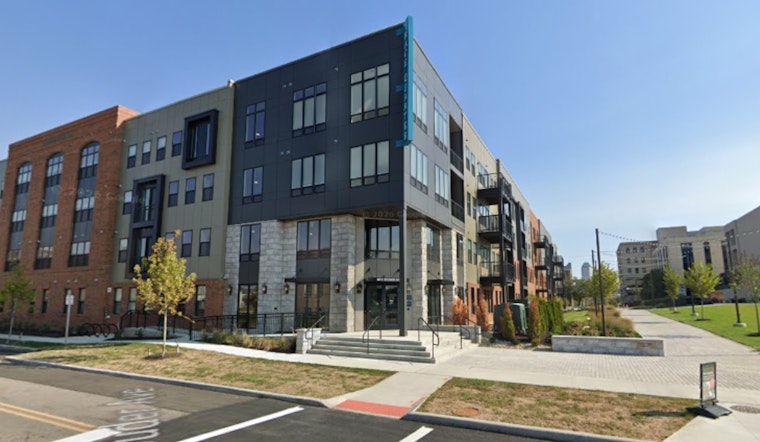
Franklinton’s weekday vibe is starting to feel a lot less sleepy, and Trace Quarter has plenty to do with it. The new apartment community on the former Mount Carmel West campus is feeding a steadier stream of residents onto nearby sidewalks, helping fill dinner shifts at neighborhood restaurants and giving local shops more of the everyday traffic they have been chasing for years. With modern units wrapped around shared courtyards and lounges, the project is already nudging up demand for ground-floor retail in this slice of Columbus.
As reported by CoStar, Trace Quarter was named multifamily development of the year for Columbus in the 2026 CoStar Impact Awards. Judges called the complex a "successful conversion of a hospital campus," and CBRE's Molly Leach said the project "completely transforms a blighted former hospital area and provides housing in a needy area." CoStar also credited the development with giving nearby retailers, restaurants and creative venues a tangible boost.
Design And Amenities Built To Keep People Local
Developer Thrive Cos. pitches Trace Quarter as an amenity-heavy community meant to keep residents rooted in the neighborhood instead of driving across town. The property at 80 South Souder Avenue lists on-site management, 24/7 maintenance, a secured package room and a courtyard pool as key perks. Multiuse courtyards and indoor lounges are billed as a kind of shared "living room" for the neighborhood, features that Thrive says make it easier for tenants to head out on foot to nearby bars, galleries and cafes, according to Trace Quarter.
Redevelopment Was Years In The Making
The overhaul of the Mount Carmel West campus did not happen overnight. Thrive’s plan followed several years of work and was framed as mixed-income housing intended to bring more customers and long-term stability to Franklinton, according to earlier coverage. Columbus Business First documented the project’s early blueprint and neighborhood leaders’ hopes that new residents would help steady the local retail corridor.
As part of the overall Mount Carmel West redevelopment package, the city also agreed to accept and dedicate a 1.7-acre park parcel at 854 West Town Street as a public-benefit piece of the project, according to the City of Columbus. Supporters have pointed to that commitment as one way the deal tries to balance private investment with community access.
Early Wins For Local Businesses, And Cautions
On the street, nearby ground-floor spaces have been steadily filling as more residents move in. Recent coverage has pointed to a wave of new restaurant and arts openings in Franklinton, with one outlet having tracked a wave of new openings that line up neatly with the neighborhood’s growing population. All that fresh activity gives local shopkeepers more potential customers within walking distance, which is exactly what many of them have been craving.
At the same time, local reporting has flagged rising concerns about rents and displacement as redevelopment speeds up. Neighborhood voices and civic watchers have noted the tension between revitalization and affordability, a theme that shows up in coverage from Columbus Underground and other area outlets that track Franklinton’s evolution.
What's Next For Franklinton
The CoStar recognition and early jump in foot traffic highlight how a single, well-executed multifamily conversion can shift the economics of a commercial strip almost overnight. Whether those gains reach long-time residents as well as new arrivals will hinge on how parkland commitments, mixed-income units and other public-benefit pieces of the Mount Carmel West plan actually play out, according to city and developer documents tied to the project.
For now, Trace Quarter is giving Franklinton merchants something concrete to point to: more neighbors walking in their doors on weeknights and a real shot at surviving, and maybe even expanding, as the neighborhood’s next chapter takes shape.





