

























































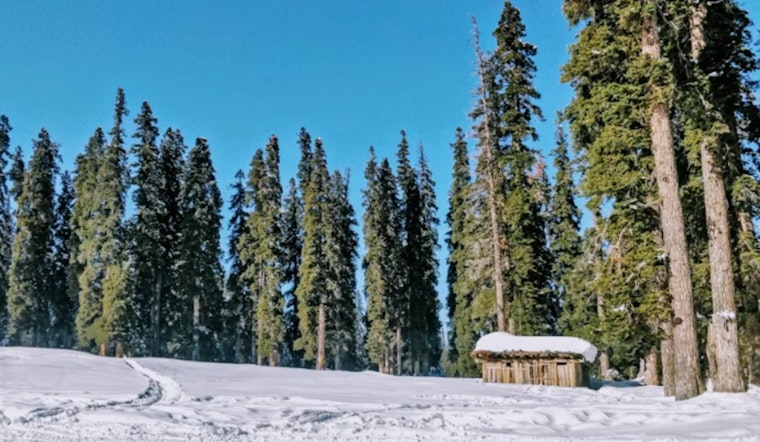
A new University of Washington field study says Central Washington might be able to fight wildfires and boost water supplies with the same chainsaw. Researchers found that selective forest thinning, typically used to cut wildfire fuel, can also restore winter snow storage, increasing snowpack by up to 30% on north-facing slopes and meaningfully bumping late-season water for the Yakima River Basin. The work, carried out on Cle Elum Ridge and comparing treated and untreated plots over multiple winters, lands in the middle of a historically low snow year, giving land managers a rare extra lever to pull.
Field experiment measured real gains
From October 2021 through spring 2023, the research team tracked about a dozen 100-square-meter plots on both north and south aspects using lidar-equipped drones, time-lapse cameras and old-fashioned snow poles, according to a University of Washington news release. After thinning treatments aimed at restoring forest health, the north-facing plots showed roughly a 30% jump in winter snowpack, while south-facing plots still managed about a 16% bump. The biggest gains came where thinning created a patchwork of canopy openings instead of a uniformly sparse stand, suggesting that how and where trees are removed matters as much as how many.
How much water that actually buys
Those snowpack boosts translate into an estimated 12.3 acre-feet of recovered snow-stored water per 100 acres on north-facing slopes and about 5.1 acre-feet per 100 acres on south-facing ground, figures highlighted by The Nature Conservancy. The published paper and its press write-up in Frontiers report that small to mid-sized canopy gaps, roughly 4 to 16 meters across, appeared to be the “sweet spot” for piling up more snow.
Why this matters for Yakima and the region
Mountain snow provides about 75% of the Yakima River Basin’s water, so even modest increases in high-elevation storage can ripple all the way down to irrigators, tribes and salmon habitat, the researchers emphasize in the University of Washington account. State officials say water-year 2026 is the warmest on record and report that statewide snowpack is still well below normal, which only adds pressure to find durable fixes, according to the Washington Department of Ecology.
Management trade-offs and next steps
Thinning is already standard practice for reducing wildfire risk, but this study suggests that treatment design, not just how aggressively crews cut, will determine whether managers also win back water, The Nature Conservancy explains. The TNC write-up and the study authors recommend teaming hydrologists with forest managers and using site-specific prescriptions so that water supply, wildlife and fire objectives can all be weighed at once. Lead researcher Cassie Lumbrazo has been walking through those practical implications in regional outlets like OPB, where she notes that the approach offers one way to claw back some of the water lost to past forest changes and a warming climate.
Scaling up will require more work
The results, published in early March in Frontiers in Forests and Global Change, are plot-scale, and the authors are clear that more field studies and modeling are needed to understand how these gains play out at the watershed scale, according to the journal post. If agencies do start reshaping thinning prescriptions to favor strategically placed canopy gaps, especially on north-facing slopes, the researchers suggest those tweaks could become a rare management win that strengthens both wildfire resilience and water security across the eastern Cascades.



