

























































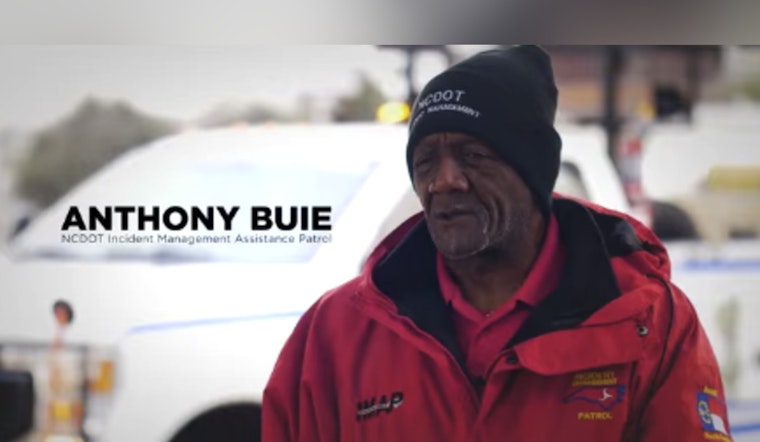
One violent hit on the shoulder of a Triad interstate almost ended Anthony Buie’s career. Months later, the Incident Management Assistance Patrol (IMAP) driver with the N.C. Department of Transportation is back at work after a crash he says came at roughly 84 mph, left him unconscious and sent him into weeks of hospital care and months of rehab.
Buie was struck while his patrol truck was stopped on the shoulder, the kind of close call that transportation officials say plays out far too often when drivers blow past flashing lights without slowing down or moving over.
Video: Buie Recounts The Crash
In a Facebook reel posted March 3, 2026, Buie walks viewers through the moment everything went sideways and the long recovery that followed. He tells the department the striking vehicle was traveling about 84 mph and that he blacked out before waking up in the hospital.
The reel, shared by the N.C. Department of Transportation, shows Buie in uniform describing what it is like to return to the very work that nearly cost him his life.
Move Over Law: What Drivers Must Do
North Carolina’s Move Over law requires drivers to change lanes or noticeably slow down when approaching stopped emergency and public service vehicles with flashing lights. Local coverage of a statewide enforcement campaign underscored that this is not just a polite suggestion. Officers reminded motorists that ignoring the law can bring fines and, if someone is hurt, criminal charges.
The reminders are part of periodic “Move Over” enforcement pushes across the state aimed at protecting the people who stand just feet away from highway traffic while they work.
State Data Shows Repeated Near Misses
NCDOT records show Buie’s story is far from unique. The agency reported its safety patrol trucks had been struck 26 times across North Carolina since Jan. 1, 2022. Officials say most of those crashes trace back to the same problem: drivers failing to slow down or change lanes when crews are working on the shoulder.
To respond, the department has created a Post Incident Review Board that examines crashes involving its vehicles and recommends safety changes. Survivor accounts like Buie’s have become a key part of NCDOT’s outreach, offering a blunt look at what is at stake when drivers do not give roadside workers space.
National Picture
Advocacy and responder safety groups say “struck by” incidents remain a stubborn threat for law enforcement, fire and EMS personnel, tow truck operators and transportation crews nationwide. The Emergency Responder Safety Institute maintains a collection of struck by resources and year by year databases that public safety agencies and researchers use to track trends and shape prevention strategies.
Those national numbers make clear that what is happening in North Carolina is part of a broader responder safety problem, not a local fluke.
Legal Consequences
State statute (G.S. 20-157) and later legislative updates spell out the Move Over requirement and set escalating penalties when violations injure or kill a worker. Recent action by the General Assembly broadened protections for public service and DOT vehicles and clarified the punishment for causing harm, ranging from fines to misdemeanor or felony charges depending on how serious the injuries are.
Court officials and prosecutors can pursue criminal cases when violations lead to serious injury or death.
Buie’s return to duty, along with his on-camera plea, is now part of NCDOT’s larger push to remind drivers that flashing amber and emergency lights mean real people are working just feet from high speed traffic. The department’s reel and related safety messages aim to turn that reminder into different choices behind the wheel, the kind that keep responders alive long enough to finish their shift and go home.




