

























































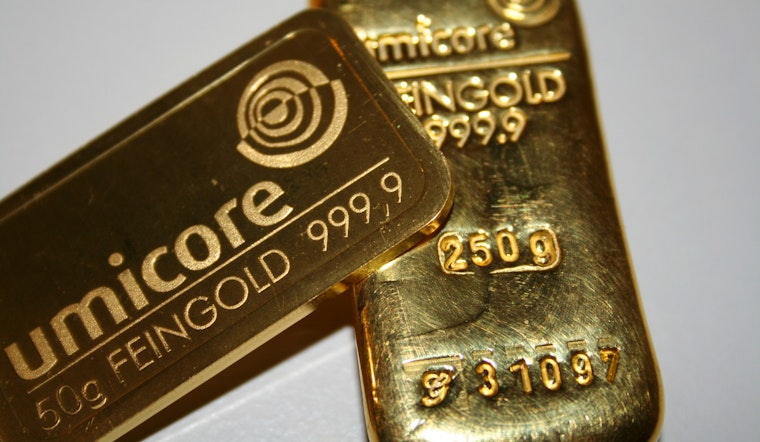
Colombia’s underworld has found a glittering side hustle, and U.S. buyers are right in the middle of it. As global gold prices surge, criminal groups have shifted serious resources into illegal mining, and a growing share of that metal is ultimately landing in U.S. markets. The story does not stop in remote Andean hillsides; it shows up in American refineries, trade data and the compliance headaches of banks and insurers. On the ground, miners and nearby communities absorb the human and environmental damage, while opaque trade flows make it harder for regulators to follow the money.
U.S. Is The Biggest Buyer
According to UN Comtrade, Colombia exported roughly $4.1 billion in gold in 2024, with about $1.5 billion of that headed to the United States. That makes the U.S. the single largest destination for Colombian gold and ties American demand directly to an industry that, in many areas, operates outside formal oversight. Reporters who visited Colombian mines documented miners, rescue teams and the dangerous work beneath towns such as Marmato, as reported by Business Insider.
Cartels Pivot As Prices Surge
"We're talking billions and billions of dollars a year in dirty money," Julia Yansura told Business Insider, describing how organized crime groups have recalculated toward gold as profits climbed. The shift has been reinforced by a blowout in commodity markets, with gold moving to record territory in early 2026 and topping psychologically significant price levels. That has turned the metal into a high value asset and a relatively convenient laundering vehicle compared with bulk cash. Analysts say gold’s liquidity, portability and weak upstream traceability make it an appealing replacement for, or complement to, narcotics revenue.
Financial System Exposure
A joint WWF‑UK and Themis report labels illegal mining a major environmental crime with significant exposure for the financial system, estimating tens of billions in illicit proceeds tied to the sector. The OECD and other studies have flagged gold concentrates and misdeclared shipments as key trade based money laundering vulnerabilities that customs agencies and banks often miss. Taken together, these reports argue that many private sector actors still lack the screening tools and traceability systems needed to detect illicit metal before it is converted into apparently legitimate revenue.
How The Metal Moves
Policy research from the FACT Coalition and briefs from the Global Initiative lay out a familiar playbook. Illegally mined gold is blended with other material, misdeclared in bulk shipments and routed through shell or front companies before it ever reaches refiners and traders. The FACT Coalition maps how anonymity in company registries and weak due diligence let illicit gold slip into formal supply chains, while a recent Global Initiative brief documents routes through neighboring countries that are used to blur the metal’s true origins. Once mixed into legitimate consignments, the gold can be banked, invested or refinanced, and banks or customs officials have few practical ways to prove it started as illegally extracted material.
Washington Begins To Act
Lawmakers in Washington have begun to respond. The Senate introduced S.3496, the "United States Legal Gold and Mining Partnership Act," which would set up a multi year strategy to curb illicit gold flows and strengthen coordination with partner countries. Congress.gov shows the bill has bipartisan sponsors and calls for U.S. agencies to coordinate financial investigations and technical assistance. Advocates say any new law will need to be paired with stronger beneficial ownership rules, refinery level transparency and updated anti money laundering guidance for the private sector to close off laundering routes.
At The Source: Marmato's Mines
The human cost is most visible in places like Marmato, a historic mining district in the Caldas department where artisanal and small scale operations sit alongside deeper industrial workings. Scientific studies and environmental assessments describe longstanding artisanal mining, impacts on water quality and the risks of underground work, while company technical reports detail ongoing industrial projects and mine levels in the same district. Local harms such as safety hazards, mercury contamination and displacement are the immediate price of a market that will monetize the same metal many times over once it moves downstream.
For U.S. readers, the takeaway is clear: buying, trading or investing in gold can have consequences far from the jewelry counter. As regulators, banks and lawmakers update their rules and tools, the real test will be whether transparency and traceability can catch up with a commodity that, for some criminal networks, has become as lucrative as narcotics.



