

























































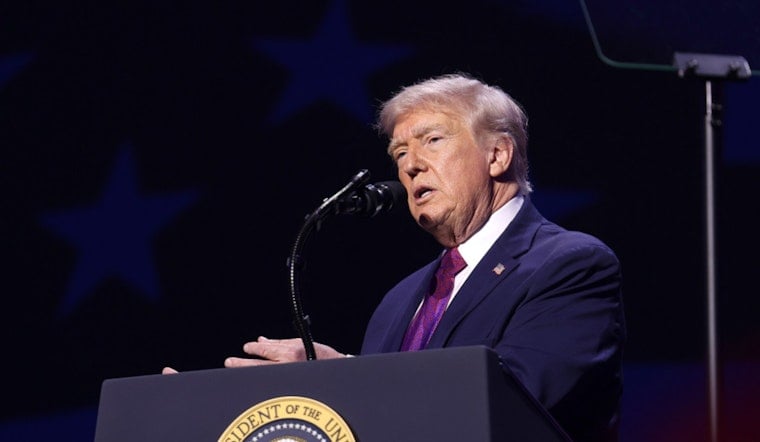
President Donald Trump has signed a proclamation imposing tariffs as high as 100% on imported drones and drone components, a move the administration says is meant to shrink America's dependence on foreign-built unmanned aircraft, much of it manufactured in China. The heaviest duties fall on large enterprise drones and thermal-imaging models, while allied nations get preferential rates well below the top tier. The new tariffs take effect at 12:01 a.m. Eastern on September 3.
According to The National News Desk, Trump signed the proclamation adjusting imports of unmanned aircraft systems and their components, with the stated goals of reducing reliance on foreign supply chains and boosting domestic manufacturing. The action follows an investigation Trump ordered the Commerce Department to conduct in 2025 into the national-security implications of importing drones and drone parts, a probe that formally began July 1, 2025, per the statutory framework laid out in Dronelife. The proclamation itself was issued August 13 under Section 232 of the Trade Expansion Act of 1962 and Section 604 of the Trade Act of 1974.
Commerce Secretary Howard Lutnick found that domestic manufacturers currently lack the capacity to meet U.S. security needs for unmanned aircraft, according to the proclamation as cited by the outlet. China has dominated the commercial drone market for years, and the new tariffs are intended to address possible national security threats tied to that dependence.
Which Drones Face the Steepest Costs
The maximum 100% tariff applies to unmanned aircraft with a maximum takeoff weight exceeding 25 kilograms, or about 55 pounds, along with drones equipped with thermal-imaging technology regardless of size, plus docking stations and other critical components, per Manufacturing Dive. Smaller drones and less-sensitive components face a lower 25% tariff instead. Those staggered tiers give a sense of which buyers get hit hardest and which get a longer runway to adjust.
Timing matters here too. The 100% tariffs on heavy and thermal-imaging drones take effect September 3, while duties on smaller, less-sensitive components are delayed 180 days, arriving February 9, 2027, the Seoul Economic Daily reports. That gap is designed to give domestic component suppliers time to ramp up production before the smaller-parts tariff lands.
Allies Get a Break, With Strings Attached
U.S. allies face a reduced 15% tariff on certain drones rather than the full 100% rate. That group includes the European Union, Japan, South Korea, Switzerland, Liechtenstein, and Taiwan, according to the seed reporting from The National News Desk. The United Kingdom gets an even lower rate, facing just a 10% tariff on qualifying drones.
To qualify for those discounted rates, manufacturers must certify that substantially all of a drone's hardware, software, and technology originate within those partner countries or the United States, according to Commercial UAV News. The origin requirement is meant to close off the possibility of Chinese-made components getting routed through allied countries to dodge the tariffs. The proclamation also gives Lutnick authority to create a tariff-relief program tied to new investments in the U.S. drone-manufacturing market.
DJI's Dominance and the Farm Equipment Problem
The scale of what the administration is targeting is considerable. Chinese drone maker DJI holds an estimated 70% to 80% of the global commercial and consumer drone market, and China's domestic drone market alone was valued at $15.6 billion in 2025, according to FLYING Magazine.
That dominance extends deep into American agriculture. Heavy agricultural spraying drones such as the DJI Agras T50 and the XAG P150 weigh over 110 pounds empty, placing them well above the 25-kilogram threshold and subjecting these widely used precision-agriculture platforms directly to the 100% tariff, reports Michigan Farm News. U.S. farmers who rely on these foreign-made spraying platforms for crop treatment could see costs rise sharply once the tariff takes hold in September.
A Broader Regulatory Squeeze on Foreign Drones
This tariff proclamation doesn't stand alone. It follows a December 2025 Federal Communications Commission decision placing foreign-made drones on its Covered List, plus a summer 2026 FCC proposed rule aimed at banning previously approved drones that feature military-grade technology like lidar and automated docking, according to the same Commercial UAV News report. Together, the moves show federal regulators leaning on both trade policy and telecommunications rules to squeeze foreign drone makers out of the U.S. market.
There's also a carve-out for military hardware. Under the order, drone products and components approved by the Department of War for an exemption from the FCC Covered List within 20 days get shifted onto the delayed 180-day tariff timeline rather than facing the September deadline. That gives defense officials time to transition equipment supply chains without disrupting operational readiness.
Markets React, and a Political Wrinkle Emerges
Wall Street moved fast on the news. Shares of domestic defense and drone manufacturers climbed following the announcement, with tactical drone maker AeroVironment gaining 32% over the past month, Kratos Defense rising 24%, and component supplier Unusual Machines surging more than 14% in early trading, according to Investing.com.
That stock jump has drawn scrutiny because of who has a stake in it. Donald Trump Jr. joined the advisory board of Unusual Machines in November 2024, receiving 200,000 stock options after acquiring 66,000 shares, and along with Eric Trump has invested in or advised at least four domestic drone companies, Forbes reports.
The tariff announcement lands amid an escalating trade standoff over drone technology. Hoodline previously reported that China banned six U.S. firms and tightened its own drone-component export controls just days before the U.S. tariff proclamation was signed. The back-and-forth follows a pattern of federal moves this year and last to boost domestic drone production, including proposed Department of Transportation rules on Beyond Visual Line of Sight operations and a June 2025 set of executive orders promoting U.S. aviation technology.



.jpg)