

























































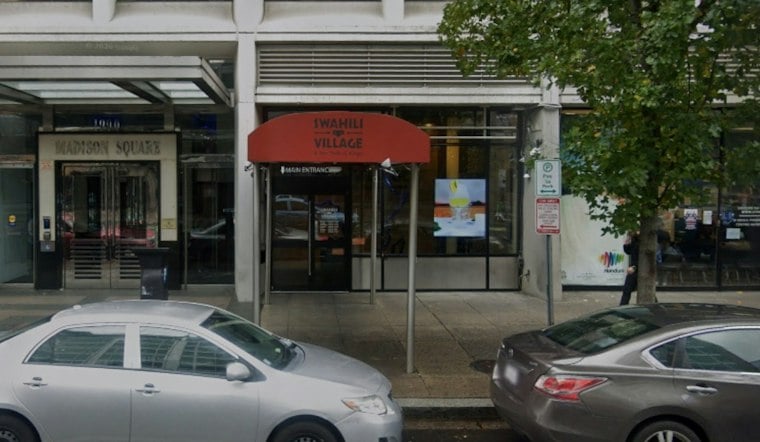
An eviction notice has been posted at Swahili Village, the Kenyan restaurant at 1990 M Street NW in downtown Washington, D.C., that had been closed for renovations with plans to reopen this past spring. The notice marks a new setback for a restaurant that has spent the past several years navigating a high-profile wage-theft settlement and, more recently, a corporate bankruptcy filing.
News of the notice was first reported by PoPville, which said simply that an eviction notice for Swahili Village has been posted, without detailing who issued it or why. The downtown location first opened in 2019 in the former Honeysuckle space on M Street, according to a March PoPville report, and had been serving East African and Kenyan dishes including nyama choma, ugali, sukuma wiki and mokimo before it shut its doors for a renovation project. At the time, the restaurant told customers it was temporarily closed and would be back later in the spring, directing diners instead to its Beltsville, Maryland location.
The downtown restaurant is a 295-seat space that, per a 2020 Eater DC report, was built to target a high-profile clientele in the heart of downtown. It is operated by Swahili Village M Street, LLC, a corporate entity tied to the broader Swahili Village hospitality group founded by Kevin Onyona, who the restaurant describes as its founder and owner. PoPville's reporting on the eviction notice described Onyona, alongside his wife Lynn, as having built the business into a culinary enterprise that the company says spans three states.
A Bankruptcy Filing Already on the Books
Court records show the financial trouble predates the eviction notice. Swahili Village M Street, LLC filed a voluntary Chapter 11 bankruptcy petition on September 26, 2025, according to BKData, with the case, numbered 25-00437, filed in the U.S. Bankruptcy Court for the District of Columbia.
The downtown location has also previously tangled with D.C. regulators over labor practices. The restaurant was ordered to pay $526,973 to workers and the District of Columbia to settle a wage-theft lawsuit, Eater DC reported, with more than 70 workers set to receive restitution under the agreement.
What D.C. Law Says About Commercial Evictions
D.C. code lays out a general framework for ending commercial tenancies that run month-to-month or quarter-to-quarter, allowing termination through a 30-day written notice from either the landlord or the tenant. Separately, D.C. Courts guidance states that only landlords or others seeking to remove a tenant or occupant from a property can sue in Landlord and Tenant Court, with a Complaint for Possession filed through the Landlord and Tenant Clerk's Office.
It remains unclear who posted the notice at Swahili Village, what grounds were cited, or whether any court filing has followed. It is also not confirmed whether the notice is connected to the pending bankruptcy case, or whether the downtown location ever reopened following its planned spring renovation.
Swahili Village's first restaurant opened in a small trailer-like space in College Park in 2009 before the business grew into a larger Beltsville location in 2016, according to Washingtonian. That same outlet reported that during the pandemic, the restaurant was operating at just 10 percent of its projected sales, underscoring the financial strain the business has weathered even as it expanded into downtown D.C. and built what it calls a thriving regional brand.




