

























































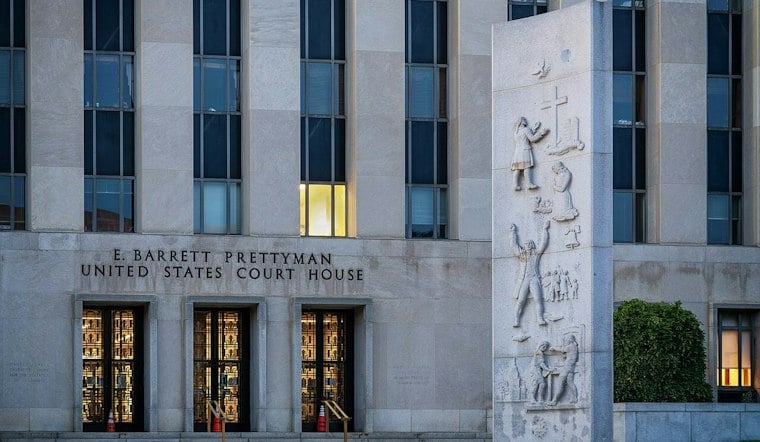
West Virginia Attorney General JB McCuskey has filed lawsuits against New Jersey and Washington, D.C., arguing their renewable energy credit programs illegally lock out the state's solar producers. The suits follow a similar challenge McCuskey's office brought against Pennsylvania in September 2026, expanding a legal fight over who gets to cash in on renewable energy markets across the mid-Atlantic.
According to West Virginia Public Broadcasting, McCuskey filed lawsuits Wednesday against solar energy credit restrictions in New Jersey and Washington, D.C. The outlet reports that both jurisdictions require certain solar credits to be purchased from producers located within their own borders, and West Virginia is asking the courts to strike down those geographic restrictions and open the markets. As reported by Tri-State Alert, renewable energy credits are essentially certificates that electricity suppliers can buy to satisfy state renewable-energy requirements, and West Virginia contends that Pennsylvania, New Jersey, and Washington, D.C., all restrict certain solar credits to in-state producers.
What the State Is Alleging
West Virginia argues the restrictions violate the Commerce Clause of the U.S. Constitution, per the same Tri-State Alert account. McCuskey said the rules create competition barriers and raise costs for energy suppliers and consumers alike, and he said they keep West Virginia solar producers from selling credits in markets where prices run significantly higher than what's available closer to home. Bloomberg Law reports that West Virginia alleges the restrictions within New Jersey's and Washington, D.C.'s renewable energy portfolio standards programs illegally discriminate against out-of-state solar generators, according to Bloomberg Law.
The dollar figures at stake are stark. Per the attorney general's office, Washington, D.C. solar energy credits average approximately $407, while New Jersey renewable energy credits can reach $200. By contrast, voluntary-market credits typically used by West Virginia solar producers are valued at between $2 and $8, according to Tri-State Alert.
Pennsylvania Suit Came First
West Virginia's fight didn't start this week. The state filed a similar lawsuit against Pennsylvania in September 2026, and Jones Day reports that on September 3, 2026, West Virginia brought a Dormant Commerce Clause challenge in a federal district court in Pennsylvania, alleging that the state's rules impermissibly barred certain out-of-state electricity generators from selling renewable energy credits there, according to Jones Day. Pennsylvania's Alternative Energy Portfolio Standards program requires electricity suppliers to obtain a percentage of their electricity from approved alternative energy sources or buy credits, per Tri-State Alert, and the state imposed geographic restrictions on certain credits, including solar and other qualifying energy-source credits.
Michele Jansen said Pennsylvania narrowed credit eligibility so that West Virginia producers could no longer sell credits there, and she said those credit costs are ultimately passed through to consumers and raise electric bills. Clint Barkdoll said Washington, D.C. mandates that 5% of its energy needs come from renewable sources such as solar, and he said West Virginia argues that renewable mandates in other PJM states raise costs in states without similar mandates, violating the Commerce Clause.
Why the PJM Grid Matters Here
The dispute plays out across a shared electrical backbone. PJM Interconnection coordinates the electric grid across 13 states and Washington, D.C., and the PJM region serves approximately 67 million people across the mid-Atlantic and portions of the Midwest, per Tri-State Alert. West Virginia solar energy producers face restrictions that prevent them from selling credits in some of those regional markets even though their power flows through the same interconnected grid.
Jones Day notes that Pennsylvania's restrictive laws resemble rules in Massachusetts, New Jersey, and Virginia, meaning a successful challenge could put other states' renewable portfolio standards and credit markets at risk. West Virginia has asked courts to strike down the geographic restrictions and allow out-of-state producers to compete on equal footing.
A Grid Under Growing Pressure
The legal fight arrives as demand on the grid is shifting fast. U.S. data centers currently account for about 5% of U.S. energy needs but are projected to account for more than 15% in the years ahead, according to Tri-State Alert. U.S. data center electricity demand is projected to more than triple over the next three to four years, and commercial electricity usage is projected to surpass residential electricity needs this year for the first time, per the same report.
This article was created with the assistance of AI technology, and readers are advised to verify information independently.




