

























































Las Vegas police and a Justice Court judge are locked in a rare public showdown over who calls the shots on pretrial release.
Metro is refusing to carry out a Justice Court order to release pretrial defendant Joshua Sanchez‑Lopez to high‑level electronic monitoring and has asked the Nevada Supreme Court to step in. Sanchez‑Lopez remains at the Clark County Detention Center even after posting bond, with a status check hearing set for this Thursday.
Back in January, Las Vegas Justice Court Judge Eric Goodman set Sanchez‑Lopez’s bail at $25,000, tied to a condition that he be placed on high‑level electronic monitoring if released. On Feb. 5, the court signed an order directing that he be released to that program within 24 hours. Metro responded by filing an emergency motion to stay the order, while the defense moved to have the department held in contempt, turning a routine pretrial decision into a turf battle over control of releases, as reported by News 3 LV.
How Metro Took Its Fight to the High Court
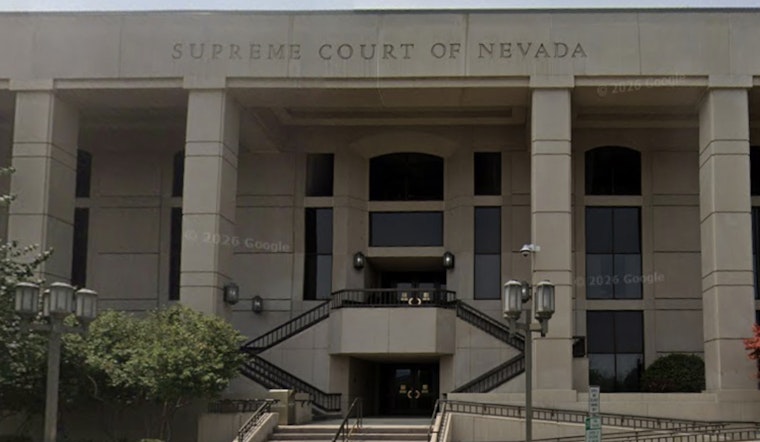
Last Monday, Metro and Sheriff Kevin McMahill petitioned the Nevada Supreme Court for a writ of prohibition that would block the Justice Court from forcing the sheriff to place Sanchez‑Lopez on electronic supervision. According to the LVMPD petition (PDF), McMahill states that supervisors with the Alternatives to Incarceration (ATI) unit concluded Sanchez‑Lopez “poses an unreasonable risk to public safety” if released on high‑level monitoring.
About the Defendant
Court filings describe Sanchez‑Lopez as having dozens of prior arrests and multiple felony convictions, including an involuntary‑manslaughter conviction, along with past failures on electronic monitoring. The Clark County Public Defender’s Office has countered that Metro’s refusal to follow the court’s release orders violates the separation of powers, a key theme in the defense’s argument. News 3 LV reports that the defense has asked for contempt proceedings and that the status check hearing is scheduled for Thursday.
The Legal Argument
Metro is leaning hard on state law. The department argues that Nevada statutes give the sheriff authority over electronic monitoring, including the power to reject participants who pose an unreasonable risk to public safety. Those provisions are found in NRS Chapter 211, the Nevada Revised Statutes (NRS) that govern county and city jails.
In its filings, Metro asks the Supreme Court to bar the Justice Court from using contempt to force the sheriff to accept a detainee into the county monitoring program. Framing the dispute as a separation‑of‑powers question, the petition argues that judges can set release conditions, but sheriffs control how and whether those conditions are implemented when it comes to electronic supervision.
What’s Next
The Justice Court is set to take up the defense’s contempt motion this Thursday, even as Metro’s petition, filed last Monday in Carson City, seeks extraordinary relief from the state’s high court. Until the Supreme Court acts, the sheriff is standing firm and refusing to place Sanchez‑Lopez into the monitoring program.
According to the LVMPD petition (PDF), Metro is asking for a writ directing the Justice Court to vacate its Feb. 5 order and to back off from any contempt threats tied to the electronic‑monitoring dispute.
Legal Implications
The case centers on a narrow but powerful question: Can a justice court compel a county sheriff to carry out a release condition when the sheriff says doing so would violate statutes meant to protect public safety?
Whatever the Nevada Supreme Court decides could reverberate well beyond this one defendant. The outcome may reshape how judges, sheriffs and detention officials coordinate pretrial release, and it could define the limits of using contempt to push local law‑enforcement agencies to implement court‑ordered supervision.




