

























































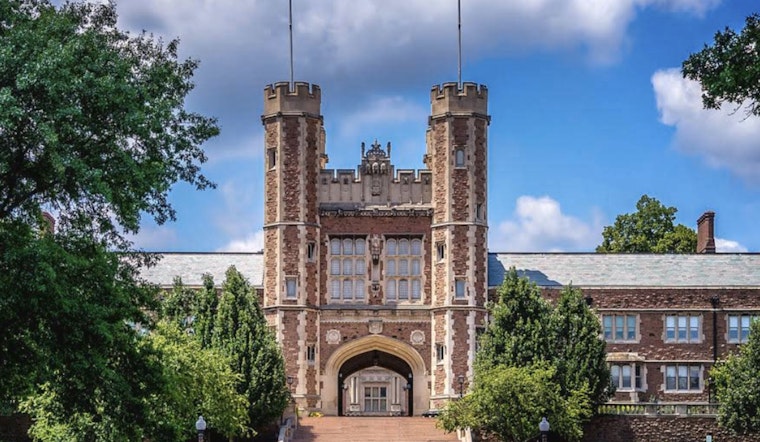
Washington University in St. Louis says it pumped a staggering $9.8 billion into the regional economy in fiscal year 2025, sending cash flowing through payrolls, clinics, labs, construction sites and neighborhood businesses across the metro. From big hospital systems to mom-and-pop shops near campus, a whole lot of St. Louis is riding the university’s spending.
According to The Source, that $9.8 billion figure covers fiscal year 2025 (ending in June) and folds in more than $1 billion in external research funding that the university says leads to new jobs and companies. The report presents the total as a mix of direct spending and a multiplier effect: WashU estimates that every local dollar it spends ultimately generates about $1.25 in additional regional economic activity. University leaders are pointing to the totals as proof that WashU is not just a campus, it is one of the region’s core economic engines.
What WashU Spent Locally
In its Community Impact report, the university breaks out how that money shows up on the ground. WashU says it directly generated $4.1 billion in regional activity, including roughly $2.6 billion in employee salaries, $334 million on local goods and services and $196 million in construction projects. Students chipped in about $217 million in spending at local businesses, everything from rent to restaurants, according to the same report. The university also points to targeted investments, such as financial aid and community programs, that it argues stretch those dollars further. The full line-item breakdown appears in the university’s Community Impact report.
Jobs, Startups and Health Care
St. Louis American, citing university figures, notes that WashU employs about 23,434 people, making it the region’s second-largest employer, and that its operations support around 60,214 jobs across the St. Louis area. The impact is not just on payrolls. The same university data count 115 startups spun out of WashU research and more than 3.4 million patient visits handled by WashU Medicine in 2025, activity that feeds local hiring and keeps vendors busy. Coverage in The Source tracks with those figures and underscores how tightly the region’s job market is linked to the university’s labs, clinics and classrooms.
But the University Is Tightening Its Belt
The splashy numbers arrive as the university is quietly pulling back in some areas. Reporting from Inside Higher Ed detailed cost-cutting moves last fall that eliminated hundreds of staff positions and closed dozens of vacant roles. University leaders tied those reductions to uncertainty around federal funding and changes to the tax on large endowments. The cuts highlight a tension that every college town knows well: a university can be a colossal economic anchor and still be under serious financial pressure. If further trimming is needed, local employers, contractors and nearby businesses that lean on WashU projects could feel the ripple effects.
Local Programs and the Return on Investment
Alongside its raw spending, WashU points to investments it says are designed to lift residents and students more directly. The university’s no-loan financial aid policy and the WashU Pledge, which it says served 351 Pledge students, are included in what it cites as a $563.8 million investment in financial aid, according to the Community Impact report. In the university’s telling, these efforts help turn salaries and research grants into broader educational and economic opportunity. For readers who want to see where every dollar is slotted, the full Community Impact report is posted online.
For St. Louis, that $9.8 billion headline number is a reminder of just how entwined the city’s fortunes are with the university, from startup incubators and hospital shifts to the contractors rehabbing the next campus building. At the same time, growing budget pressures mean the region cannot simply assume the spigot will stay wide open forever. City leaders and business owners will be watching closely in the coming year to see whether research funding, hiring and construction plans hold steady. For now, the university’s report offers the clearest scoreboard of how much WashU money is coursing through the local economy.



