

























































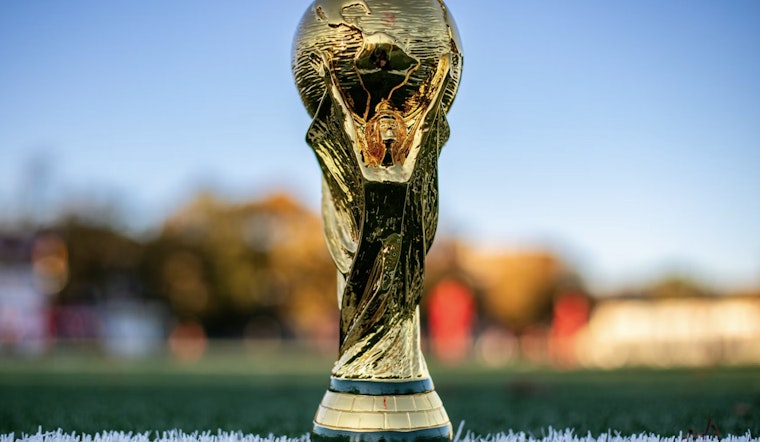
Hundreds of national federation officials and FIFA staff are in Atlanta this week for a three-day team workshop that was supposed to be fairly routine. Instead, with the clock ticking to under 100 days before the 2026 World Cup kicks off, the gathering has turned into a crash course in crisis planning, with security, travel and worst-case scenarios suddenly dominating the agenda.
The meetings, described locally as a convergence of technical and team-services staff, are now doubling as a live tabletop exercise in geopolitics as tensions between the U.S. and Iran rise, according to the Atlanta Business Chronicle. An official at the sessions told the outlet that the conflict is driving fresh contingency planning, and several federations have already tweaked their schedules in response.
Publicly, FIFA leaders are keeping things tight-lipped. General Secretary Mattias Grafström said it was "premature to comment" but added that FIFA would "monitor developments" as they unfold, according to FourFourTwo. At the same time, Iran football federation president Mehdi Taj has warned that his country may not be able to take part, saying "we cannot be expected to look forward to the World Cup with hope," per the Associated Press via WSB-TV. That sort of language has injected a new level of urgency into the discussions behind closed doors.
What planners are discussing in Atlanta
Inside the workshop rooms, officials are walking through everything from match organization and team facilities to broadcast operations, media logistics, accreditation and, front and center, safety and security, according to a draft agenda obtained by Sports Business Journal. Once the meetings wrap, team representatives are set to fan out for inspections of their planned base camps, a standard pre-tournament ritual that now comes with a heavy dose of geopolitical sensitivity.
How Atlanta is bracing for the Cup
Atlanta officials say the city’s host committee and local agencies are working in lockstep with federal partners to keep World Cup preparations on schedule while building in security backstops, according to a recent city release on major-event readiness efforts at Atlanta City Hall. The White House’s FIFA 2026 Task Force serves as the federal coordination hub for host cities, giving Atlanta a direct line to raise security or visa issues if the situation demands it, per the White House.
Could Iran be replaced?
If Iran ultimately pulls out, FIFA’s regulations give the organization wide latitude to replace a participating association or shift matches elsewhere. Exactly how that would work in practice is not clearly spelled out for the public, The Independent notes. Football insiders say names in the conversation include other Asian Football Confederation countries such as Iraq or the UAE, but any swap would demand rapid legal, logistical and diplomatic maneuvering and could send shockwaves through hosting plans across the country.
For Atlanta, the focus for now is practical rather than hypothetical. Organizers say work is rolling ahead on transport, fan zones and venue security, while separate contingency teams and extra briefings run alongside the regular planning. The official goal has not changed, they insist: stage a safe, inclusive World Cup. The difference is that everyone in those meeting rooms knows events far from the pitch may yet decide how the tournament actually looks when the whistle blows.





