

























































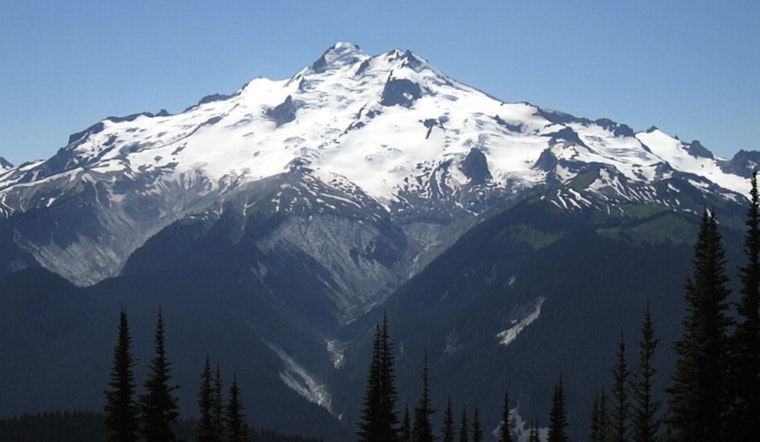
The Sunlight Glacier tucked beneath Sunlight Peak in Wyoming is wasting away fast, and researchers say some of its thinnest sections could disappear within just a few years. New measurements show the ice thinning at rates close to half a meter per year, with many parts now hanging on with only a few meters of ice left. Put together, that rapid melt and the dwindling ice thickness point to strips of the glacier going ice free within a decade, while the thickest remnants are expected to last longer into this century.
Study, authors and headline numbers
The work comes from a multi-institution team led by Tyler Meng of Washington University in St. Louis, summarized by the university after the study appeared in a special issue of the journal Annals of Glaciology. According to Washington University in St. Louis, the Sunlight glacier system is shedding ice at rates of up to about 50 centimeters per year and now holds an estimated 5–20 meters of total ice in place. Meng told the university he was struck to find portions that were only about four meters thick.
How researchers reconstructed a century of change
In the published paper in Annals of Glaciology, the team pieces together a more than 100-year history of Sunlight’s rise and fall. They combined high-resolution drone photogrammetry with synthetic aperture radar (SAR) satellite images and geophysical surveys, then traced the record all the way back to an 1893 U.S. Geological Survey photograph. By stitching modern field measurements together with long-term satellite archives, the researchers built a detailed timeline of thinning and ice flow, using these tools to estimate surface speeds and mass loss that line up with an accelerating decline in the Sulphur Creek and Sunlight basin.
Hazards for slopes and downstream water
The study notes that the story is not only about losing a postcard-worthy patch of ice. As the glacier shrinks, newly exposed rock and thawing ground ice can destabilize surrounding slopes, which lifts the risk of landslides. At the same time, the loss of steady meltwater reshapes streamflow into nearby watersheds. As Washington University in St. Louis points out, those shifts ripple well beyond the high country, since glacier melt in the Absaroka Range feeds river systems that eventually tie into larger basins such as the Missouri. The authors call for continued monitoring so land managers and communities can stay ahead of changing threats to infrastructure and ecosystems.
One glacier, and a broader trend
Sunlight’s retreat fits into a much larger pattern. Recent modeling work suggests that the number of individual glaciers disappearing each year is likely to peak around mid-century, with thousands of glaciers vanishing annually under higher warming scenarios. A recent analysis in Nature Climate Change describes this as a risk of “peak glacier extinction,” and underlines that the loss of small, local glaciers has outsized impacts on culture, tourism and water supplies. In that context, detailed case studies like the Sunlight record become handy reality checks for both monitoring and adaptation plans.
What comes next
The paper notes that the project received support from NASA programs and lays out a toolkit that other groups can use on similarly small and hard-to-reach mountain glaciers. In the Annals of Glaciology article, Meng and coauthors report that more field surveys and remote sensing campaigns are in the works, aiming to pin down the timing of ice loss and keep a closer eye on slope stability. For scientists and nearby communities alike, the message is blunt: local ice is disappearing faster, and only ongoing monitoring will give people a decent chance to prepare for the downstream impacts and shifting landscape risks.





