

























































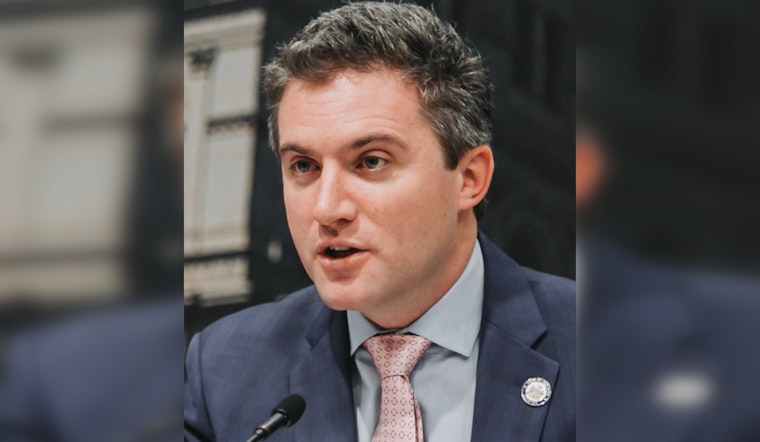
New York State Senator James Skoufis is trying to give survivors of so-called conversion therapy a powerful new tool: the right to drag their former therapists and bosses into civil court. Filed in Albany in early April, his proposal, S9817, would revive some expired claims and let victims seek punitive and noneconomic damages on top of any financial losses.
What S9817 would do
The bill would create a private right of action against licensed mental-health providers who engage in what it labels "sexual orientation or gender identity change efforts." It explicitly carves out supportive, exploratory and gender-affirming therapy so those are not on the chopping block. According to the New York State Senate, plaintiffs could seek economic and noneconomic damages, punitive awards and attorneys’ fees.
The proposal would not stop at individual practitioners. It would also let victims sue clinics, employers or supervisors that "knew or had reason to know" conversion therapy was going on and did nothing to shut it down.
Key deadlines and proof rules
S9817 also stretches the legal clock for survivors. People treated as minors could sue "until the plaintiff turns fifty-five years of age," while adults would have 20 years from their last treatment session to file a claim, according to the New York State Senate. The bill would open a three-year lookback window for cases that have already aged out.
On the proof side, the measure lowers some causation hurdles by allowing "general causation" to be established through expert testimony, letting plaintiffs lean on scientific and clinical consensus unless a defendant knocks that down in court. Supporters say those tweaks reflect how long it can take survivors to recognize the damage done.
How the Supreme Court shifted the landscape
Skoufis rolled out S9817 in the wake of the U.S. Supreme Court's March 31 opinion in Chiles v. Salazar, which raised the legal bar for laws restricting conversion therapy by treating certain talk therapy as protected speech. As the Legal Information Institute notes, Justice Neil Gorsuch wrote that the Colorado statute, as applied to talk therapy, "regulates speech based on viewpoint" and must face stricter review when it lands back in the lower courts.
Modeled after California proposals
Skoufis has said he looked west for inspiration. His bill mirrors recent California proposals that would shore up survivors' ability to sue over harms tied to conversion practices. California lawmakers, including Senator Scott Wiener, have pushed ideas to widen malpractice and civil remedies for victims, according to the San Francisco Chronicle.
Advocates respond
LGBTQ advocates wasted no time slamming the Supreme Court ruling and calling for a legislative counterpunch. In a March 31 statement, Lambda Legal labeled conversion therapy "discredited and harmful" and urged lawmakers to pursue legal remedies. Skoufis told News10 that "most court watchers were unsurprised" by the high court's move, even if advocates were far from thrilled.
Next steps in Albany
S9817 landed in the Senate on April 6 and was sent to the Senate Codes Committee for a first round of review. According to LegiScan, the bill will need to clear that committee and then win full floor votes in both chambers before it can reach the governor's desk. Sponsors say they hope the measure forces a serious debate over how to protect survivors in the Supreme Court's newly tightened constitutional framework.
Legal hurdles ahead
Even if S9817 makes it all the way into law, court battles are almost guaranteed. The Supreme Court has already signaled that strict scrutiny will apply when legislation brushes up against therapists' speech. Analysis at SCOTUSblog notes that judges will have to balance First Amendment protections against states' interest in policing harmful medical practices. That means any revived lawsuits under S9817 are likely to trigger fresh waves of litigation over where that line gets drawn.





_NYS_Senator_James_Skoufis_(cropped).jpg)