

























































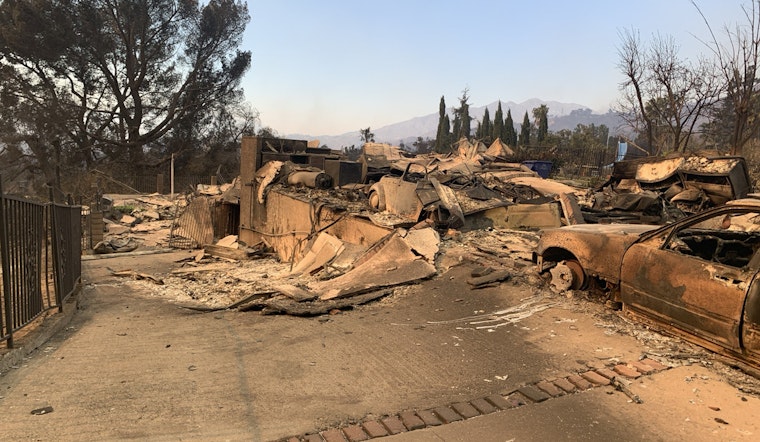
Los Angeles County planners told the Altadena Town Council on Tuesday that the community’s post‑fire rebuild will unfold on two parallel tracks, a split that could leave residents waiting until 2029 for a full blueprint even as a shorter term recovery push rolls out this summer.
The plan, laid out in person at the Altadena Community Center, carves recovery into a faster conceptual effort focused on burn‑scar neighborhoods and a slower, decade‑long Capital Improvement Plan that will steer major public works projects across the region. The timeline for that long‑range plan, which would not be finalized until the first half of 2029, had residents pressing county officials for fixes they can see in the near future.
The dual‑track presentation was delivered by Los Angeles County Department of Public Works Principal Engineer Alicia Ramos and Department of Regional Planning Senior Planner Clark Taylor, according to Pasadena Now. Ramos said the Conceptual Infrastructure Recovery Plan, centered on the Eaton and Palisades burn scars, is on track to be completed this summer. She also warned that the funding mechanisms are still a question mark. Planners pointed residents to a digital community survey and said a more detailed briefing on the Capital Improvement Plan, or CIP, will go to the council’s Rebuilding and Infrastructure Committee in mid May.
Two plans with very different clocks
The West San Gabriel Valley Capital Improvement Plan is a separate, longer range project that will set infrastructure priorities for multiple unincorporated communities. The county’s planning site notes that the broader area plan was adopted in March 2025 and that formal CIP work began in early April. The draft schedule calls for analysis through 2026, plan drafting in 2027 and a final version by the end of 2028, followed by roughly six months of public hearings. That puts a finished, 10 year CIP in place sometime in the first half of 2029, a pace Taylor acknowledged “doesn’t match up very well with Altadena recovery” and one that had residents asking for immediate, low cost projects instead. As reported by Pasadena Now, Taylor added that the CIP’s scope has been narrowed to three county controlled categories: stormwater, sanitary sewer, and the road and mobility network.
Big money questions and utility headaches
The financing side is still fuzzy. The county has already authorized an Altadena recovery financing district that will capture future property tax increments for rebuilding, but those revenues will only grow over time, and officials have floated ideas such as interim bonding and other temporary tools to bridge the gap. Local reporting describes how the district was created and how it will be governed and cites county materials that estimate the mechanism could support well over $1 billion, potentially up to roughly $2 billion, in infrastructure investment, with priorities and sequencing to be worked out later. At the same time, planners and residents are wrestling with utility coordination and the steep cost of undergrounding. Homeowners have reported out of pocket estimates in the tens of thousands of dollars to connect to Southern California Edison’s new buried lines, a separate expense that could complicate recovery for individual properties. (Altadena Now; Altadena Now.)
What neighbors are asking for right now
Council members and residents urged the county to jump on what they called “low hanging fruit” while the bigger planning and financing conversations drag on. Sidewalks, bike lanes and targeted ADA improvements near schools and bus routes topped the list, according to public comments at the meeting. The West San Gabriel Valley CIP webpage and related event materials show that the county is posting kickoff documents and community resources online as outreach ramps up, and planners say community input will help determine which projects move first once funding and technical analysis are in place. In the coming weeks, the county and the town council’s rebuilding committee will be watching to see whether the faster recovery plan produces tangible, near term projects residents can actually use, even as the broader CIP keeps grinding toward its 2029 finish line. (Los Angeles County Department of Regional Planning.)





