

























































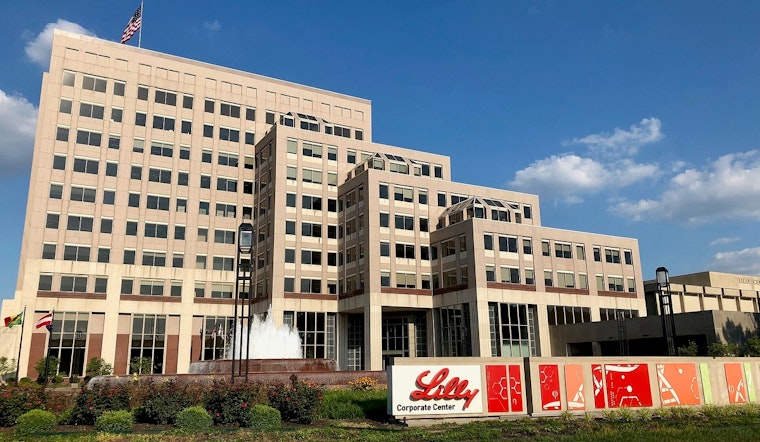
A federal appeals court on Thursday jolted a high-stakes patent fight between Teva Pharmaceuticals and Eli Lilly back to life, reviving Teva's claims over competing migraine drugs and reopening litigation that once produced a $176.5 million jury award before a judge wiped it off the books. The case now heads back to the U.S. District Court in Massachusetts, keeping fresh legal pressure on Indianapolis-based Lilly as both sides brace for another round.
The U.S. Court of Appeals for the Federal Circuit reversed the lower court's finding that Teva's patents were invalid and remanded the case for further proceedings, according to Reuters. The ruling breathes new life into claims Teva first brought in 2018, alleging that Lilly's Emgality steps on patents tied to Teva's Ajovy migraine treatment.
A Boston jury found in 2022 that Emgality infringed three Teva patents and awarded $176.5 million, but U.S. District Judge Allison D. Burroughs later granted judgment as a matter of law for Lilly, concluding that the asserted claims were not adequately described or enabling. Her detailed memorandum walks through why the jury verdict could not stand and how damages were calculated at trial. Those court documents are public; see the order as posted by PatentlyO.
Teva pursued the appeal through counsel at Goodwin Procter, while Lilly's appellate team has included lawyers from Finnegan and in-house counsel, according to filings on the Federal Circuit docket. The consolidated appeals carry numbers 24-1094 and 24-1149, tracking the filings and attorney appearances as the case moved through the appellate calendar. See Justia for the record.
The dispute pits two monoclonal antibody migraine preventives, Teva's AJOVY and Lilly's EMGALITY, against one another in a crowded and lucrative market. Teva has reported that AJOVY generated roughly $673 million in recent full-year sales, while Lilly continues to list Emgality among its growth products in investor materials, underscoring the commercial stakes. See reporting and company filings from Teva and Eli Lilly.
What’s next
With the Federal Circuit's remand, the Massachusetts court will now take up renewed briefing, pretrial motions and scheduling issues that could set the stage for a new trial or fresh rulings that end the case before it reaches a jury again. Either side could seek further interlocutory review or work to preserve key issues for another trip to the Federal Circuit, depending on how the district court resolves enablement, written-description and infringement questions.
The appeals court's docket page and oral-argument materials lay out how the panel handled the consolidated appeals; see the audio and related materials from the Federal Circuit.
Legal implications
At the center of the fight are two bedrock patent-law doctrines, written description and enablement, which the district court found lacking when it set aside the jury verdict and which the Federal Circuit has now told the lower court to revisit. If the patents survive renewed scrutiny and infringement is again found, the 2022 damages award could be reinstated, and willfulness findings could leave Lilly staring at enhanced liability on top of the original number.
The district court's memorandum spells out the scientific and legal concerns that drove the 2023 judgment and will likely frame the next round of arguments; see the full order as shared by PatentlyO.
Local impact
For Indianapolis, home base for Eli Lilly, the revived suit keeps a high-profile legal and business story very much alive. The outcome could shape how investors view Lilly's migraine franchise and influence how the company positions Emgality inside its broader portfolio.
Local outlets have been tracking how the dispute fits into Lilly's strategy and competitive landscape in migraine care; for added context, see coverage from the Indianapolis Business Journal.





