

























































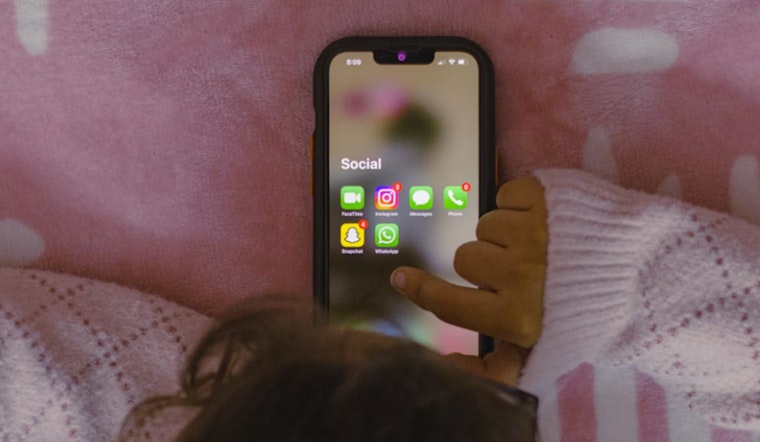
Beacon Hill is gearing up for a major showdown over kids, phones and social media. Massachusetts lawmakers rolled out a sweeping package Monday that would sharply cut young people’s time online and clamp down on cellphones in school, with House leaders promising a floor vote on Wednesday, April 8, 2026. The plan is being sold as a two‑track push: new rules for social media platforms that serve minors, paired with stricter school policies to keep phones out of classrooms.
In broad strokes, the initiative ties together age‑verification requirements, expanded parental access to kids’ accounts and a school pilot program to test tech that makes student devices inoperable while they are on campus.
House Leaders Detail Under‑14 Social Media Ban And Parental Controls
House Democrats are calling the proposal one of the toughest in the country. It would bar children under 14 from having social media accounts at all and require “verifiable” parental consent for 14‑ and 15‑year‑olds, as reported by The Boston Globe. A leadership summary from the speaker’s office says the package would push platforms to build out age‑verification systems and give parents access to account data tied to minor users.
On the school side, House leaders say they want that platform language moving in tandem with a requirement that districts adopt policies effectively banning phones during the school day. The message: if kids are not supposed to be online, they should not be scrolling in math class either.
What The Bills Actually Say
Behind the talking points are bill texts already filed at the State House. One measure (H.5295), filed earlier in the session, defines a “child” as a Massachusetts resident under 16 and orders platforms to prevent or terminate accounts for anyone under that age. A separate education bill (H.4745) tells the Department of Elementary and Secondary Education to draft model phone‑ban policies and to run a pilot program in up to 10 districts testing technology that can render personal devices inoperable on school grounds, according to the Massachusetts General Court: H.5295 and H.4745.
The education bill text also spells out privacy safeguards, exceptions for students with IEPs and health‑related needs, and deadlines for districts to submit their local phone policies by September 1, 2026. In other words, districts would not just be encouraged to act, they would be put on the clock.
The Legal Minefield Ahead
None of this is landing in a legal vacuum. Efforts in other states to limit minors’ access to social platforms and to force sweeping age‑verification systems have repeatedly turned into courtroom battles, and Beacon Hill lawmakers know it. Florida’s 2024 law to bar many children from social media and require parental consent in some cases was signed by the governor, then quickly put on hold by a court order while lawsuits go forward, according to AP News.
Civil‑liberties organizations and tech industry groups argue that outright bans and strict verification rules collide with the First Amendment and raise serious privacy concerns. If Massachusetts pushes ahead with similar language, few on Beacon Hill expect the final word to come from legislators rather than judges.
What Comes Next On Beacon Hill
The House vote scheduled for Wednesday, April 8, 2026, will serve as the first big test of whether leadership’s carefully assembled package can survive floor debate and what kinds of amendments lawmakers are willing to swallow. Governor Maura Healey and other top state officials have already come out in favor of tougher school phone restrictions and tighter guardrails on social media platforms, and Hoodline previously covered Healey’s calls for a bell‑to‑bell phone ban as a centerpiece of her education agenda.
From here, expect a long slog: hearings, amendments and almost certain legal threats. The bills could be narrowed, heavily revised or rewritten altogether as they move through committee, across the House and back to the Senate before anything lands on the governor’s desk. For now, Beacon Hill is signaling that the status quo on kids, phones and social media is on borrowed time.





