

























































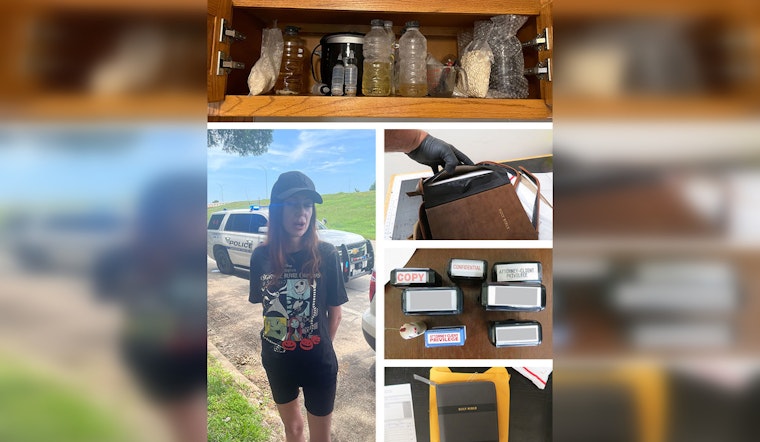
A Wichita Falls woman is headed to state prison after officials say she turned religious mail into a delivery system for synthetic drugs. On April 9, 2026, Henna Havila Martinez was sentenced to six years behind bars after pleading guilty to mailing synthetic cannabinoids and other narcotics into multiple Texas Department of Criminal Justice units. Investigators say Martinez hid the drugs inside leather-covered Bibles and an assortment of incoming mail, including religious materials, magazines, newspapers and legal correspondence. Staff at the Allred Unit flagged the packages when certain pages tested positive for synthetic cannabinoids, which triggered an Office of Inspector General investigation.
According to a press release from the Texas Department of Criminal Justice, Martinez pleaded guilty and received a six-year sentence. Executive Director Bobby Lumpkin stated, "This case underscores the persistent challenges we face in contraband entering our facilities through the mail," and he credited the vigilance of mailroom staff and the OIG probe with keeping the drugs out of the inmate population.
How investigators traced the packages
Investigators eventually traced the suspicious parcels to an Office Depot in Wichita Falls. Store surveillance reportedly showed Martinez at a self-checkout kiosk mailing three packages that together contained about 360 grams of synthetic cannabinoids, according to reporting by the Austin American-Statesman. The same reporting notes that a later search of her residence turned up roughly 4.9 pounds of synthetic cannabinoids in liquid, powder and sheet forms.
Books and mail as contraband vectors
Synthetic cannabinoids, often sold under trade names like K2 or Spice, are lab-made chemicals designed to mimic THC, the Drug Enforcement Administration warns. DEA materials state that these products are routinely packaged without safety information and can trigger severe reactions.
Corrections officials and prosecutors have documented similar schemes in which these chemicals are soaked into or sprayed onto printed materials. In a recent federal case, the U.S. Attorney’s Office in Connecticut said a defendant arranged for a book to be mailed with pages laced with synthetic cannabinoids, and a U.S. Attorney’s Office in Connecticut release described that method in detail.
Legal implications
Under Texas law, it is a crime to manufacture, deliver, or possess synthetic cannabinoids, and the state’s legal team has repeatedly moved to shut down their sale and distribution, according to the Office of the Texas Attorney General. The Texas Attorney General's Office has warned that these products are illegal in Texas and has used both civil and criminal actions against sellers. Martinez’s six-year sentence follows her guilty plea and reflects how seriously authorities treat attempts to smuggle concentrated synthetic drugs into correctional facilities.
"Smuggling drugs into prisons endangers the lives of both the inmates and staff," Office of Inspector General Inspector General Lance Coleman said, emphasizing the importance of routine mail screening and staff reports in stopping contraband. TDCJ said the case will remain part of ongoing efforts to tighten mailroom controls and pursue those responsible for supplying incarcerated people with dangerous substances. Prosecutors have not indicated whether Martinez faces additional state or federal charges beyond the sentence announced by TDCJ.





