

























































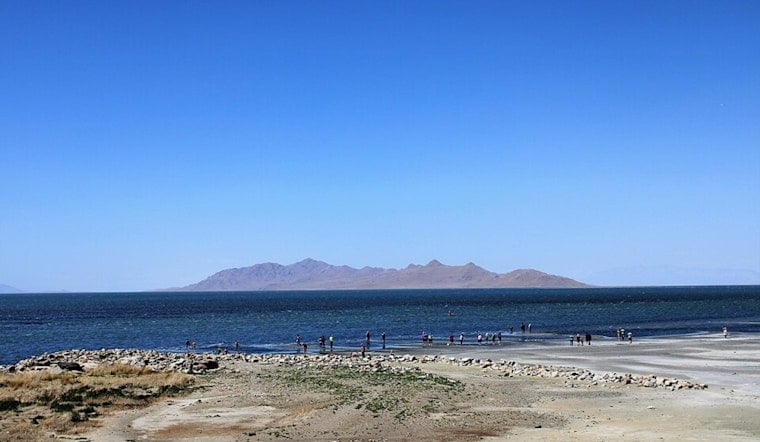
Spring migration along the Great Salt Lake has turned into a kind of avian rush hour. With wetlands shrinking across the West, vast flocks of shorebirds and waterfowl are piling into the lake’s remaining mudflats and marshes, crowding into any basin that still has water. Biologists say the surge is less a miracle comeback and more a reshuffling of the deck: as other saline stopovers disappear, the birds that used to spread out are now squeezing into Utah’s last, working wetlands. The spectacle is thrilling for birders but worrying for managers, who see warning signs in the crowding, from habitat stress to disease risk.
Out at Ogden Bay and other management units ringing the lake, crews on airboats and along shorelines are watching the pattern play out in real time. Kyle Stone, project leader for the Great Salt Lake Ecosystem Program, told KSL that "With these low lake conditions, we're seeing a lot of the birds that are here are being artificially concentrated in the areas that are left." Stone stressed that what looks like a boom is really a side effect of losses at other saline lakes, not a sudden spike in local bird numbers.
Long-running counts show concentration, not recovery
To sort out real recovery from simple crowding, managers lean on decades of data. The Great Salt Lake Ecosystem Program has coordinated waterbird surveys since 1997, according to a Utah Division of Wildlife Resources report, giving biologists a long baseline to detect shifts in when and where birds use the lake. The Division also manages nine Waterfowl Management Areas around the lake, including Ogden Bay, that are operated to store water and to provide staging, nesting and feeding habitat for migratory shorebirds and waterfowl, according to the program’s wetlands overview.
Other saline lakes that once hosted birds
The squeeze is being driven in large part by what is happening elsewhere in the West. California’s Salton Sea has lost broad stretches of open water and now depends on a multi-agency monitoring and restoration effort laid out in the Salton Sea MIP Annual Work Plan. Mono Lake has faced chronically low water levels and recent nesting failures among its colony-nesting California gulls, a decline detailed by the Mono Lake Committee. As those once-reliable stopovers struggle, birds that used to scatter among several saline lakes are increasingly showing up at the Great Salt Lake.
What managers are doing
State agencies, nonprofits and researchers are working quickly to protect what is left of the lake’s wetlands and to decide where limited water will do the most good. The National Audubon Society and partner organizations helped launch the Great Salt Lake Watershed Enhancement Trust to secure and time water deliveries and to fund wetland projects designed to improve habitat, according to Audubon and the Trust’s reporting. On the ground, land managers are going after invasive phragmites with herbicides, mechanical removal and prescribed burns to knock back thirsty stands of vegetation and bring back native marshes, a strategy described by the Utah Department of Natural Resources.
"It's not too late for the Great Salt Lake," Stone told KSL, arguing that decisions made now will pay off for birds and wetlands in the future. Results and impact reports from the Great Salt Lake Watershed Enhancement Trust highlight water transactions and wetland grants meant to keep key habitats functioning, while spring shorebird surveys are expected to sharpen the picture of how species are redistributing along the Pacific Flyway. As managers tally the season’s counts, they say the larger, lingering challenge is finding a way to share a finite water supply between human demands and the habitat needs that keep this crowded stopover alive.





