

























































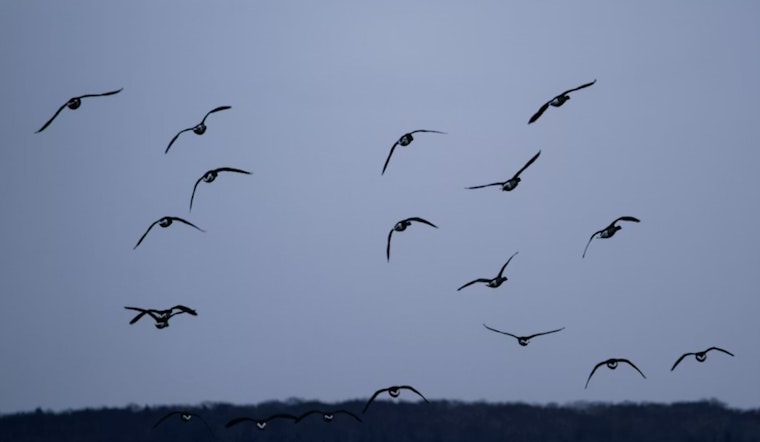
Washington’s nighttime sky is turning into a crowded flyway this week, with radar forecasts lighting up as waves of migrating birds stream across the state. Conservation groups are warning that bright city skylines could lure tired songbirds off course and into windows and buildings, a combination that often ends badly for the birds. Models and radar loops are flagging several nights as heavy migration events on national trackers, and local Audubon chapters are already urging residents and businesses to turn down the glow while the movement is underway. The request is straightforward: trim nonessential lighting overnight so migrants get a safer shot at passing through.
According to KING5, national forecasts showed more than 165 million birds in the air on the night of April 16, with BirdCast estimating that roughly 845,000 of them were over Washington that same night. Purdue University's AeroEco Lab maps also flagged elevated activity over Seattle and Tacoma in the coming nights, projecting several thousand migrants above those urban centers. Both tools rely on weather‑radar signatures and atmospheric forecasts to estimate how many birds will be on the wing a few hours after sunset.
Why lights matter at night
Many warblers, thrushes and other small songbirds that move along the Pacific Flyway travel under cover of darkness, using stars and the Earth’s magnetic field to navigate. That nighttime strategy works well until artificial light gets in the way. Audubon Washington notes that light pollution is one of the biggest threats to nocturnal migrants, and its Lights Out Washington campaign urges people to dim or shut off nonessential lighting during peak migration windows. The program offers tailored tips for homeowners and building managers on cutting skyglow while still keeping properties safe.
Simple steps that help
Conservation groups recommend turning off nonessential indoor and outdoor lights between 11 p.m. and 6 a.m. on high‑alert nights and closing blinds so birds are not drawn toward bright windows. BirdCast lays out those hours, offers signups for location‑specific alerts, and suggests using warm‑toned, shielded fixtures whenever possible. Managers of larger buildings are also encouraged to darken atriums and lobby lighting during peak nights to cut down on skyglow that can pull migrants into downtown cores.
What to watch this week
Local reporting notes that spring migration is only just ramping up and typically builds to a mid‑May peak along the Pacific Flyway, according to Axios Seattle. Residents who want to get involved can connect with local Audubon chapters for volunteer monitoring and keep an eye on lab forecasts to see which nights will carry a particularly large share of the season’s movement.
If you find a stunned or injured bird
If you come across a stunned bird, experts advise placing it gently in a ventilated cardboard box, keeping it in a quiet, warm spot and contacting a licensed wildlife rehabilitator. The Bird Collision Prevention Alliance provides basic first‑aid guidance and links to local responders. Do not try to feed or release a bird that is still dazed; call a rehabber or wildlife hotline for instructions and report any collisions to local monitoring groups so scientists can better identify and track collision hotspots.





