

























































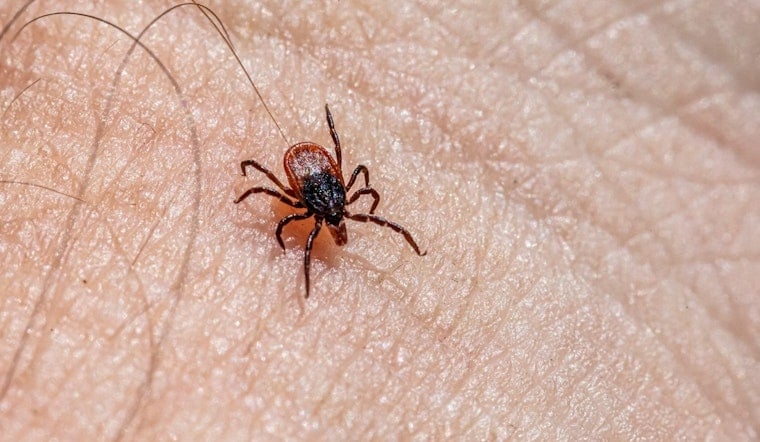
Emergency rooms in Chicago and across the Midwest are already seeing a wave of tick bite patients, weeks before the usual May surge, according to federal data and local health officials. The early spike means more chances for Lyme disease and other tickborne infections right as people are finally heading back outside.
CDC data show ER visits at highest levels in years
According to data from the CDC, weekly emergency department visits for tick bites are at their highest level for this point in the year since 2017. During the most recent week, roughly 71 visits per 100,000 ER encounters were logged. That is more than double the typical rate for April, as reported by ABC News, with the Northeast leading the nation and the Midwest not far behind.
Illinois officials urge simple prevention steps
The Illinois Department of Public Health is urging residents to treat every trip outdoors like tick season is already in full swing. The agency is reminding people to check themselves, kids, and pets after being outside and to stick to basic, proven precautions, according to an Illinois Department of Public Health release.
State guidance includes walking in the center of trails instead of brushing up against tall grass or shrubs, wearing light-colored clothing so ticks are easier to spot, and tucking pants into socks for an extra barrier. Officials also recommend using EPA-registered repellents with about 20% DEET or an equivalent product, showering within two hours of coming indoors, and tossing clothes into the dryer on high heat for 10 minutes to kill any ticks that hitched a ride.
What experts are saying
“Tick season is here and these tiny biters can make you seriously sick,” Alison Hinckley of the CDC’s Division of Vector-Borne Diseases said, stressing the importance of repellents, permethrin-treated clothing, and getting attached ticks off as quickly as possible. Hinckley also urged people to seek medical care promptly if they develop a fever or rash after a tick bite, according to NBC Chicago.
When to worry and what to do
Not every tick carries disease, and not every bite needs antibiotics. Clinicians note that preventive treatment can be effective in certain situations. Federal guidance explains how to remove a tick safely and when a single dose of doxycycline, given within 72 hours of tick removal, can be considered.
The CDC “What to Do After a Tick Bite” guide walks through step-by-step removal with fine-tipped tweezers, cleaning the bite area, and watching for symptoms. The Illinois Department of Public Health also recommends saving the tick in rubbing alcohol or a sealed container in case identification is needed later.
Why this season feels different
Experts told ABC News that warmer winters and an early spring likely nudged ticks into activity ahead of schedule. At the same time, growing public awareness about Lyme disease and other infections may be sending more worried patients straight to the ER. May is still the usual peak month for tick-related emergency visits, and officials say it is too soon to know whether this early surge will stretch through the summer.
For local help, the Illinois Department of Public Health maintains prevention guidance and tick surveillance tools, and county health departments can advise on tick submission and testing. If you develop a fever, a spreading rash, or other flu-like symptoms after time outdoors, clinicians say you should call your doctor right away rather than waiting to see if it passes.





