

























































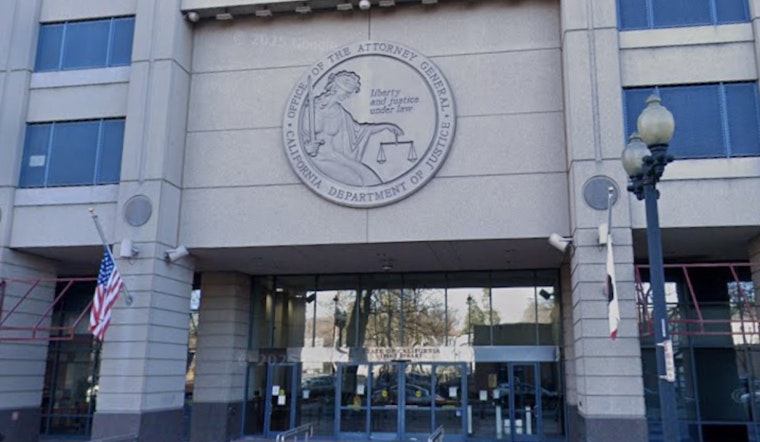
California Attorney General Rob Bonta has stepped straight into a high-stakes Supreme Court fight over Roundup warnings, siding with 17 other states in a case that could reshape how much power states have to demand safety labels on pesticides.
On Wednesday, Bonta joined a multistate amicus brief urging the justices not to wipe out state "failure-to-warn" lawsuits in Monsanto Co. v. Durnell. The filing argues that federal pesticide law should not block consumers from bringing state claims just because federal regulators chose not to require a specific warning, casting the dispute as a public health and consumer protection battle with national reach.
According to the California Department of Justice, Bonta joined the brief as part of a coalition asking the Court to continue upholding these important protections for consumers & public health. The press release notes the case is tied to allegations that Roundup caused a Missouri man's cancer. Rob Bonta also flagged the move on X, repeating that "Federal law does not — and should not — stand in the way of state failure-to-warn claims."
Federal law does not — and should not — stand in the way of state failure-to-warn claims.
— Rob Bonta (@AGRobBonta) April 1, 2026
That’s why we’re urging the Court to continue upholding these important protections for consumers & public health.
State-law standards help ensure consumers can make informed decisions &…
The Durnell case stems from a 2023 St. Louis jury verdict that awarded plaintiff John Durnell $1.25 million after jurors found his non-Hodgkin’s lymphoma was linked to years of Roundup use. Monsanto appealed, and the Supreme Court agreed to hear the case, but only on a narrow question: whether the Federal Insecticide, Fungicide, and Rodenticide Act, or FIFRA, preempts label-based failure-to-warn claims when the Environmental Protection Agency has not required the warning at issue. The Court added the case to its docket earlier this year, according to the Supreme Court.
In their brief, the states - led by New Mexico with California among the signers - urge the Court to apply its earlier decision in Bates v. Dow Agrosciences and hold that FIFRA does not erase state duties to warn that are consistent with federal labeling rules. The amici contend manufacturers can satisfy both federal registration requirements and state-law warning obligations, and they warn that a broad preemption ruling would strip consumers of a crucial backstop when federal regulators choose not to require a warning. Their full arguments are detailed in the filing, according to the California Department of Justice.
Monsanto, now part of Bayer, has pushed the justices to resolve what it describes as a split among lower courts and to hold that uniform federal pesticide regulation blocks state label-based claims. Bayer has framed a win for Monsanto as key to preserving nationwide consistency in regulation and protecting agricultural access to glyphosate products. Observers also note that the United States filed its own brief on the preemption question as the Court took up the case. See statements from Bayer and analysis at SCOTUSblog.
What's at stake
If the Court sides with Monsanto, many state-law failure-to-warn claims could be shut down, undercutting a theory plaintiffs have leaned on in tens of thousands of Roundup suits and potentially trimming state consumer protections more broadly. Plaintiffs and public health advocates argue that a preemption ruling would remove a key path to holding companies accountable when federal regulators opt not to mandate a particular label warning.
The litigation also overlaps with massive settlement efforts and corporate reserves. Reporting on the issue has highlighted a proposed $7.25 billion settlement and the sheer volume of Roundup claims across the country, according to DTN.
Next steps and timeline
The Supreme Court has set oral argument in Monsanto v. Durnell for April 27, and the justices' ruling will determine whether state juries can keep hearing label-based failure-to-warn claims against pesticide makers. Trial courts and litigants around the country are already closely watching the case, and some related suits have slowed or paused while the high court weighs in, according to the Supreme Court.
Bonta's filing signals that California's top law enforcement officer sees the dispute as more than a single product liability fight. For him and the other states, it is a test of whether state consumer protection rules can operate alongside federal regulatory schemes or whether a federal pesticide label effectively ends the conversation about what safety information consumers ultimately see. With arguments scheduled next month, the case has jumped from a Missouri jury verdict into a national showdown over federalism, public health and who gets the final say on warnings for one of the world's most recognizable weedkillers.




