

























































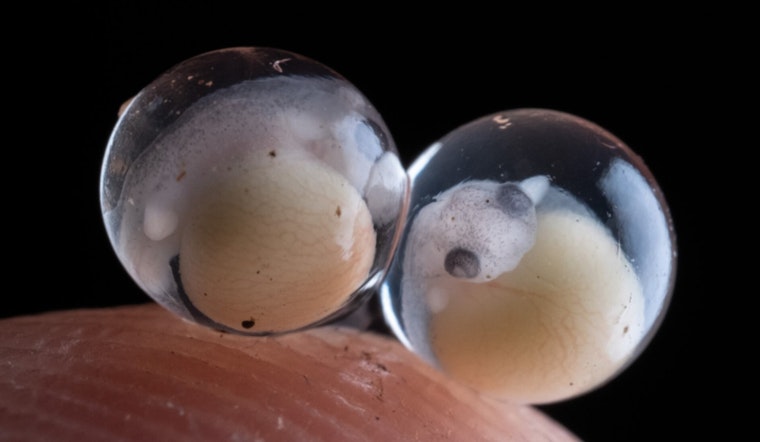
A Boston-based federal judge has slapped down U.S. border authorities for yanking the visa of a Harvard researcher who showed up at Logan Airport with frog-embryo samples in her luggage. On Tuesday, U.S. District Judge Christina Reiss ruled that a customs officer improperly canceled the scholar’s visa, calling the move “arbitrary and capricious” and rooted entirely in the biological material agents found at Boston’s Logan Airport. The ruling drops a live-wire fight over border power and academic travel right into the heart of the city’s research scene.
Judge says CBP overstepped
In a written opinion, Judge Reiss said Customs and Border Protection officers have only narrow authority to cancel visas and concluded that officers pulled the plug on this one for a single, impermissible reason, according to the Associated Press. “The undisputed facts reveal that Ms. Petrova's visa was impermissibly canceled because of the frog embryo samples and for no other reason,” the opinion said, per the outlet. The Department of Homeland Security did not immediately respond to reporters asking for comment.
What happened at Logan
Kseniia Petrova, a Harvard researcher, was returning to Boston from France in February 2025 after visiting a specialist lab that prepares superfine sections of frog embryos for research, according to the Boston Globe. At a Logan Airport checkpoint, customs agents flagged undeclared samples in her luggage and told her on the spot that her visa was being canceled. She was first held in Vermont, then transferred to an ICE facility in Louisiana, court filings and news reports recount.
Criminal case and timeline
Not long after, federal prosecutors in Boston indicted Petrova on charges that include smuggling and making false statements. She later convinced a judge to let her return to her Harvard lab in January, according to the Harvard Crimson. Prosecutors say their evidence includes paperwork and text messages agents recovered during the initial inspection at Logan. The criminal case is still active in federal court, running in parallel with ongoing immigration proceedings.
Reaction from legal and academic circles
“Tuesday's ruling was an important step toward 'correcting what should never have happened in the first place,'” Petrova's attorney Gregory Romanovsky said in a statement, according to the Associated Press. Around Boston’s campuses, researchers and university officials say the saga exposes a risky gap between the mundane realities of shipping and carrying lab materials and the hard edge of immigration enforcement, a mix they worry could spook international collaborators. Legal scholars have pointed out that the decision raises tricky questions about when a border inspection and a few pages of customs paperwork can snowball into visa cancellation and the start of deportation proceedings.
What’s next
The ruling grows out of a habeas petition filed in Vermont and is widely expected to trigger either a government review or a possible appeal that could send the dispute higher up the federal court ladder. In the meantime, the underlying criminal prosecution in Boston is moving ahead, with future court filings likely to dictate how quickly discovery and other pretrial motions unfold, according to the Boston Globe. Advocates for international researchers say the case underscores the need for clearer federal guidance on how biological research materials should be handled at ports of entry.
Local stakes
For Harvard and the wider Boston research ecosystem, Petrova’s case has become a high-profile stress test of how immigration enforcement can collide with routine lab work and overseas field trips. University leaders and immigration advocates warn that uncertainty over what border officers can and cannot do with visas may ripple through hiring decisions, grant schedules and long-planned collaborations abroad, a concern that has surfaced repeatedly in reporting and campus debates. Judge Reiss’s conclusion that a CBP officer exceeded his authority could pressure DHS and the State Department to finally spell out more precise rules for handling scientific samples at the border, a change local institutions will be watching very closely.





