

























































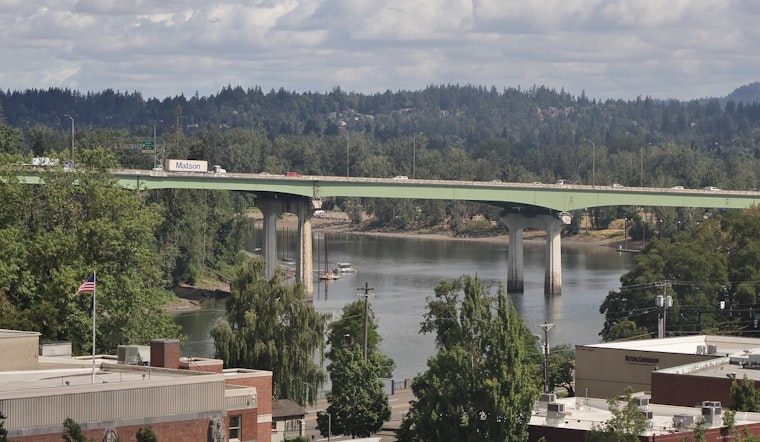
Work on the Abernethy Bridge, the I‑205 span between Oregon City and West Linn, now looks likely to run into the next decade, keeping parts of the riverfront torn up and squeezing parking and trails for years to come. Residents were told this week that landscaping and longer term restoration could continue through 2030, and that some park land may remain in use for construction staging well past the original timetable. The seismic retrofit and lane work began in 2022 and have been repeatedly reshaped by unexpected engineering needs, contract changes and rising costs.
ODOT’s Math: Huge Price Tag, Long Road
According to the Oregon Department of Transportation project page, Phase 1A of the I‑205 improvements, which covers the Abernethy Bridge work, carries roughly a $672 million construction authorization and lists construction as having started in 2022. The page describes the bridge upgrade as one of the largest highway investments in Oregon in decades and notes that the work will make the crossing earthquake ready for the Portland metro area. That scale helps explain why city leaders and state officials are now wrestling with payments, easements and longer staging periods along the riverfront.
Contractor Timeline Versus Agency Targets
Local TV reporting says ODOT staff told the Oregon Transportation Commission the construction effort is about 70 percent complete and that roughly $499 million had been spent through February, but that the contractor, Kiewit, has requested an extended finish date in early January 2028. KOIN adds that commissioners were told staff are putting together a recovery schedule and looking for ways to shorten the remaining duration. That gap between the contractor’s ask and the agency’s targets now sits at the center of the schedule and budget debate at the commission level.
Parks, Payouts and Local Pain
As reported by The Oregonian/OregonLive, ODOT has been using portions of Jon Storm Park and the Sportcraft Boat Ramp Park to stage equipment and complete soil stabilization work, and the agency asked the city to extend park access into 2031. The reporting says ODOT provided permanent easement payments of roughly $29,600 and $67,300 to the two parks and paid about $119,500 for temporary easements, while city commissioners discussed an additional extension payment near $300,000. Local business owners described steep losses tied to the long construction window, and one operator told reporters the business saw roughly 12,000 fewer visitors since 2021 and a revenue drop of more than 50 percent.
Why the Schedule Slid
Officials told the commission the delays stem from additional soil stabilization work and unexpected concrete pier strengthening that required extra engineering, added contract days and higher costs. The Urban Mobility Strategy finance packet prepared for the Oregon Transportation Commission lays out those funding pressures and warns the Abernethy project now faces a sizable shortfall that the commission could close by cutting other STIP projects or issuing long term bonds. Commissioners pressed staff about contractor accountability and recovery options as staff continue to model cost and schedule scenarios.
What Residents Should Expect Next
Oregon City leaders have directed staff to negotiate an intergovernmental agreement that would require ODOT to preserve public access, maintain signage and stick to anticipated deadlines while the work continues. Residents can expect regular updates at upcoming city and commission meetings as ODOT, Kiewit and local officials sort out the remaining work, additional funding needs and the timeline for returning the riverfront to full public use.





