

























































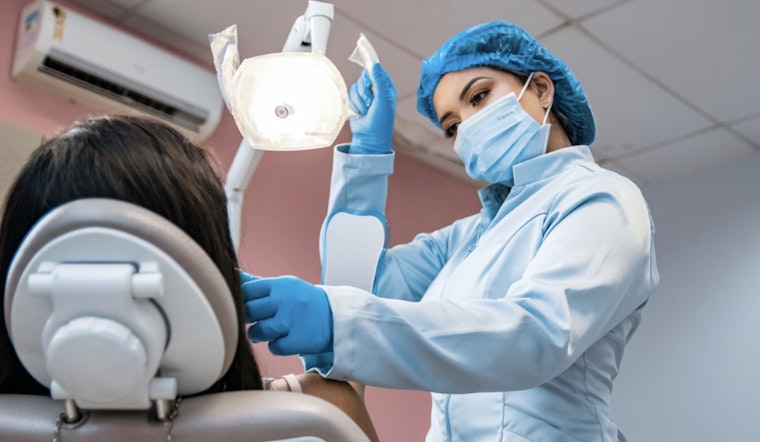
School-based dental programs in New York City, heavily concentrated in the Bronx, are quietly missing the very kids they are supposed to help. A new analysis finds that children most at risk for tooth decay are less likely to be enrolled in in-school prevention clinics, while classmates who already see a dentist are more likely to get signed up.
Researchers who linked school program records to Medicaid claims report a clear pattern. Students with a history of regular dental visits were more likely to participate in school dental prevention, while children who had never seen a dentist or had needed emergency dental care were less likely to be enrolled. The findings raise uncomfortable questions about how consent forms, outreach methods and program design shape who actually benefits from care delivered on campus.
The cross-sectional study examined 63,217 Bronx children enrolled in Medicaid, including 1,030 students who participated in school caries prevention programs. The team found that having no prior dental visits was tied to about a 17% lower odds of program participation. They also estimated that if programs could eliminate selective enrollment and reach higher-risk children more consistently, it could avert roughly $2.4 million in nontraumatic dental-related emergency department charges. The results appear in JAMA Network Open (April 9, 2026).
"Our study suggests that children who may need these services the most are the ones least likely to receive them," said lead author Shulamite Huang of NYU, according to a press release. To get there, the researchers linked student-level data from the CariedAway school trial to Medicaid claims, comparing participants with nonparticipants and modeling later emergency department costs. They argue that parental informed consent and other enrollment hurdles are likely driving selection, and say programs will need new recruitment strategies if they want to reach the highest-need kids.
Consent, outreach and program design
In New York City schools, dental teams generally cannot touch a tooth without written parental consent, a seemingly small bureaucratic step that can have big consequences. The NYC Office of School Health notes that school-based dental providers are required to treat only children who have submitted written consent, and that offerings can range from quick sealant clinics to fully outfitted dental vans parked outside the building.
That mix of program types, plus uneven outreach, language barriers and pandemic-era disruptions, helps explain why some of the Bronx children with the greatest dental needs ended up underrepresented in the CariedAway trial. If the permission slip never makes it home, never gets translated or never comes back, the child most in need of a filling or preventive treatment is effectively locked out of care sitting right down the hallway.
Evidence, cost and next steps
The new paper builds on the broader CariedAway research program, which tested a simpler, noninvasive approach using silver diamine fluoride plus fluoride varnish against standard sealant-based care in schools. That earlier work found the two strategies similarly effective at preventing new cavities in students, suggesting that lower-intensity, easier-to-deliver treatments can work just as well in many cases. For details on the CariedAway protocols and trial design, see PCORI.
The takeaway from the latest analysis is less about clinical technique and more about who even gets in the chair. The authors argue that scaling up proven protocols will not deliver equitable benefits unless schools and providers overhaul enrollment and consent processes so that children who currently miss out are finally reached.
Local business and health outlets have framed the findings as a practical roadmap for policymakers who want to stretch public dollars further while cutting preventable emergency room visits. As reported by Crain's New York Business, the study offers hard numbers that city and state officials can use when rethinking outreach, consent rules and funding for school-based dental care.





