

























































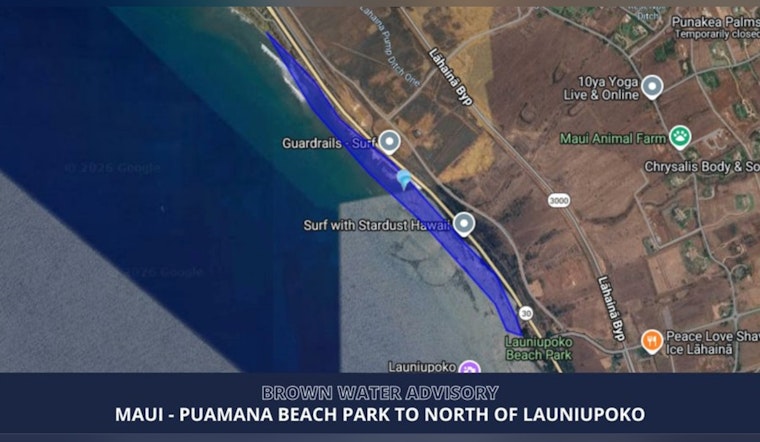
The Hawaiʻi State Department of Health on Wednesday issued a brown water advisory for a stretch of West Maui shoreline running from Puamana Beach Park to the north end of Launiupoko Beach Park. As part of the response, Launiupoko Beach Park has been temporarily closed while officials assess water clarity and safety. The advisory follows heavy rains and extended flood watches that have pushed runoff into nearshore waters across the islands, and visitors and residents are being urged to stay out of discolored or murky water until authorities lift the alert.
A #brownwateradvisory has been issued from Puamana Beach Park to north of Launiupoko Beach Park on Maui.
— Hawaiʻi State Department of Health (@hawaiidoh) April 14, 2026
For more information:
https://t.co/9DHhvWPMLe https://t.co/TPiDgbFswQ
Official Advisory And Park Closure
Health officials have specifically flagged the shoreline between Puamana and Launiupoko, noting the temporary closure of Launiupoko Beach Park while staff evaluate current conditions. The advisory is meant to warn beachgoers that nearshore water in the area may be contaminated and to cut the risk of wound infections, gastrointestinal illness and other health problems that can follow contact with polluted runoff.
Statewide Weather And Advisories
This local advisory is unfolding against the backdrop of an extended Flood Watch for the entire state. The governor's office reports that brown water advisories are in effect for Oʻahu, Kauaʻi and Maui as agencies track storm-related runoff and flooding, according to the Office of the Governor. State and county officials are urging people to stay plugged into local alerts and to avoid driving through flooded roadways.
Why Water Turns Brown
Brown water events typically happen when heavy rain washes soil, debris and polluted runoff into coastal waters. That runoff can carry a messy mix of contaminants, including overflowing cesspools or sewers, pesticides, animal waste and other pollutants, agencies note. Military and environmental pages outline the same risks: stormwater can transport pathogens and chemicals that turn otherwise safe swim areas into a health concern, especially near stream mouths and outfalls, as explained by Marine Corps Base Hawaii environmental staff.
How Long It May Last And What To Do
The Hawaiʻi Department of Health generally recommends staying out of the ocean for 48 to 72 hours after heavy rain and waiting until the beach has had full sunshine before jumping back in. If you do end up exposed to brown water, the guidance is to wash exposed skin with soap and water, clean and cover any wounds, and seek medical care if you develop symptoms, according to the DOH Clean Water Branch. The department also cautions against swimming or wading in freshwater streams or ponds during and after storm events because of the risk of leptospirosis and other infections.
Local Testing And Past Advisories
The Department of Health and local monitoring groups have posted similar brown water advisories around Maui after previous storms, including alerts that covered stretches from Puamana to Pāpalaua. Those episodes show how quickly runoff can change nearshore conditions, as reported by Maui Now. Routine sampling and post-event testing help officials decide when it is safe to reopen beaches, although lab results can lag behind rapidly shifting ocean conditions.
Where To Check For Updates
For the latest on beach and park status, residents and visitors are encouraged to follow local alerts from the County of Maui and other trusted local outlets. The county's CivicAlerts page lists facility closures and service updates, including park notices, at County of Maui CivicAlerts. Officials advise waiting until advisories are officially canceled before resuming water activities.
This post will be updated if the Department of Health or county officials lift the advisory or change the status of Launiupoko Beach Park. Until then, the guidance is simple: steer clear of murky water and follow the advice of public health authorities.





