

























































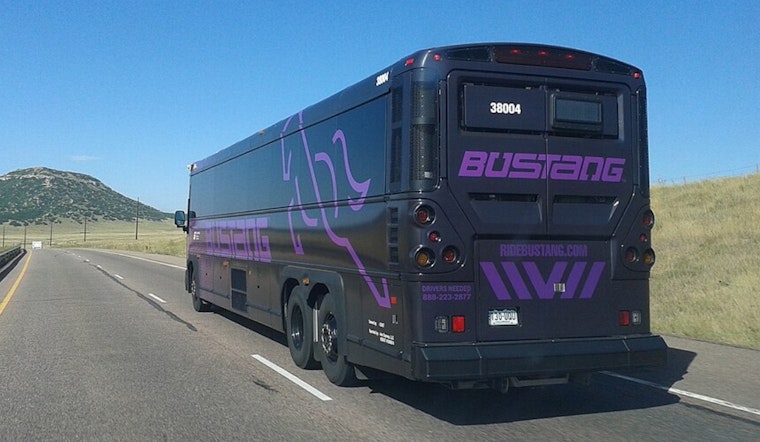
Colorado’s state-run Bustang bus network is staring down possible service cuts after the Colorado Department of Transportation signaled it will not ask lawmakers this year for a new dedicated funding stream. With temporary dollars set to dry up, agency staff are now scrambling to either plug the hole with other money or prepare to trim routes and frequency.
CDOT Rules Out Asking Lawmakers For New Money
CDOT officials told reporters the agency will skip a legislative funding request this budget cycle and instead look inside its own books to cover a looming deficit. “To eliminate the funding gap without finding new revenue, we would have to significantly reduce service to what we were able to offer in 2023,” a CDOT staffer said during agency briefings. Those comments and presentations were detailed by Colorado Public Radio.
How Big Is The Gap?
Recent analyses and agency charts put Bustang’s operating shortfall at roughly $28–30 million in 2027 if one-time and pilot funding is not replaced, a hole that would force either service reductions or new revenue moves. The deficit traces back to a 2022 legislative pilot that delivered temporary money to expand service and buy buses, but did not create a permanent revenue stream. The Southwest Energy Efficiency Project has pulled together the numbers and the potential statewide transit impacts.
A Decade Of Growth, Now At Risk
Launched in 2015, Bustang has grown into a network linking Front Range cities with mountain and rural communities, now carrying hundreds of thousands of riders each year. CDOT and local partners used the 2022 pilot funds to buy additional buses, add more trips, and build mobility hubs, investments that helped fuel rapid ridership growth. That history and the funding choices that followed are laid out in coverage from Rocky Mountain PBS.
Toll Revenue And Reprogramming Are On The Table
In planning materials, CDOT has outlined a mix of stopgap and longer-term options: reprogramming air quality and other multimodal dollars, tightening operations to shave costs, or steering some Colorado Transportation Investment Office toll revenue toward transit. The agency’s budget documents show growing managed lane and toll receipts that planners say could be available for multimodal uses if policymakers sign off. Those projections are visible in CDOT’s proposed fiscal year 2027 budget.
What Cuts Would Look Like
Agency modeling and outside analysis suggest the fastest way to save money would be to cut frequency, meaning fewer buses running less often on Bustang’s busiest corridors. That would land hardest on the core I-25 and I-70 routes, preserving basic service while wiping out many of the frequency gains that helped attract riders in the first place. Observers warn that rolling back service now risks undoing much of Bustang’s ridership progress in recent years.
A Tight Deadline
CDOT staff told reporters they need a short-term funding strategy locked in by the start of calendar year 2027 if they want to avoid abrupt cuts. That schedule means decisions about shifting money or scaling back operations will land over the next several budget cycles as CDOT finalizes its fiscal year 2027 plan. The agency has already warned commissioners and local partners that any fix will require trading off continued growth for financial stability, according to Colorado Public Radio
Polis, Riders And What To Watch Next
Gov. Jared Polis and CDOT have promoted Bustang as a popular, lower-emissions travel option. Now elected officials must decide whether to turn that temporary pilot cash into a lasting revenue stream or let the system shrink back to earlier levels. Watch Colorado Transportation Investment Office policy decisions, Transportation Commission budget votes, and any legislative talks this session for clues about whether Bustang keeps expanding or is told to retrench. Local reporting and the governor’s own remarks offer context on the politics behind that call, as per Denver7.




