

























































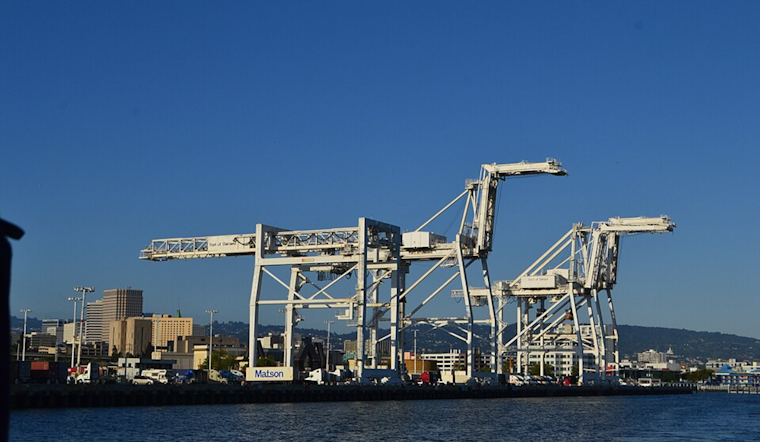
Oakland’s waterfront is already catching the chill from a global goods trade that looks set to downshift. Container volumes plunged in February, then bounced back in March, and that whiplash is now hanging over trucking companies, warehouses and Bay Area retailers that depend on a steady flow of inbound cargo.
A new forecast projects that global merchandise trade will grow about 2.5% in 2026 and again in 2027, roughly half the pace of last year’s nearly 5% surge, according to Bloomberg. That cooler outlook is a reminder that any broader trade slowdown will not stay abstract for long. It will show up at ports, on carrier schedules and in local supply chains that feed the Bay Area economy.
Why Forecasters Expect Trade To Cool
Economists are circling two big culprits: a spike in energy costs tied to conflict in the Middle East and a new round of protectionist moves that is reshaping where companies source their goods. The International Monetary Fund has warned that the regional war could undercut growth and push inflation higher, according to the IMF. At the same time, Oxford Economics has flagged shifting tariffs and earlier front-loading of imports as lingering drags on trade flows.
What This Means At The Port Of Oakland
Some of the pressure is already visible in U.S. import numbers. The National Retail Federation’s Global Port Tracker is calling for year-over-year declines in import cargo during the first half of 2026 as tariff uncertainty keeps retailers cautious, according to the NRF.
Local data at Oakland line up with that story. The port handled 163,254 twenty-foot equivalent units, or TEUs, in February, a 14.5% drop from a year earlier, according to Bay City News Service reporting. Then, as vessel calls normalized, volumes bounced to roughly 198,667 TEUs in March, industry reporting shows. The swings, with imports falling faster than exports, make life harder for truckers and warehouse operators that bulked up during last year’s front-loading rush and now have to guess how much business is really coming.
Ports Are Repositioning And Investing
To keep things moving through the soft patch, terminal operators and the port are leaning into upgrades and long-term deals. The Port of Oakland has launched a roughly $1.2 billion berth-deepening and terminal upgrade program and is working on multi-year lease agreements with major terminals to secure investment and new services, according to Air Freight News.
For Bay Area workers and businesses, that could mean quieter docks and less gridlock in the short run, but also leaner revenue for drayage firms and warehouse operators that feasted on the 2025 inventory surge. For now, the best clues about where this is heading will come from the port’s monthly TEU counts and the NRF’s Global Port Tracker, which together will signal whether Oakland is dealing with a brief lull or staring at a longer trade cooldown.




