

























































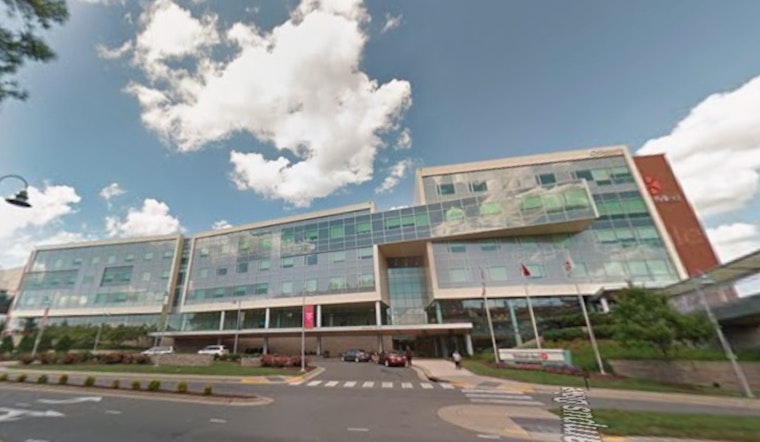
Charlotte's Duke Endowment is cutting a nearly $10 million check for a new statewide experiment in keeping people out of the hospital. The four-year pilot, called Bridge to Health, will bankroll hospital-based "bridging" clinics at six North Carolina health systems, targeting high-risk patients with chronic medical, mental-health and social needs. The idea is straightforward: step in where traditional care falls short and stop people from bouncing back into emergency rooms and inpatient beds. The model borrows heavily from work started at WakeMed's community health program, which has been focused on breaking that cycle.
In a news release, The Duke Endowment said it is putting up a $9.8 million gift over four years to launch Bridge to Health and support the six systems across the state. "We are thrilled to launch the Bridge to Health initiative," Jay Kennedy, the Endowment's senior program officer for health care, said in the announcement. The foundation said the pilot emphasizes proactive outreach and individualized care delivered outside the usual clinic walls in order to drive down overall costs and hospital use.
According to the North Carolina Healthcare Foundation, the multi-year investment includes $7.9 million distributed across the six sites, with $1.4 million going to WakeMed for its role as cohort leader and key advisor and $6.5 million headed to the five additional health systems. Another $1.9 million is set aside for technical assistance and evaluation work with the Duke-Margolis Institute for Health Policy. The grant is designed to help hospitals launch or grow hospital-based transitional clinics that can stabilize acute medical, mental-health and social needs, then hand patients off to community providers. Officials say the effort is also about building an evidence base to support the kind of payment reforms needed to scale and sustain the model long term.
The participating systems include WakeMed Health, Novant Health Forsyth Medical Center, Atrium Health Wake Forest Baptist, Cone Health, ECU Health and UNC Health, according to The Charlotte Post. Each will either launch or expand a hospital-based bridging clinic aimed at stabilizing patients with complex needs while tightening the handoff to primary care and community organizations. WakeMed's Center for Community Health, led by Drs. Brian Klausner and Theresa Amerson, is credited as the inspiration for the statewide model.
How the pilot will roll out
The program is structured as a four-year, two-phase effort, with a first-year planning phase followed by three years of implementation, The Duke Endowment said. During the planning year, participating sites are expected to design their hospital-based transitional clinics and work out the details on referrals, staffing plans and data collection. Duke-Margolis and NCHF will lead evaluation efforts that track outcomes such as reduced hospital readmissions, better control of chronic diseases and improvements in mental-health symptoms.
Why this matters
Advocates say bridging clinics could help plug some of the most stubborn gaps in outpatient care, particularly for patients dealing with homelessness, trauma and substance-use disorders, and could generate data to support new payment models that reimburse hospitals and community groups for that work, officials with the North Carolina Healthcare Foundation said. The strategy builds on broader North Carolina care-coordination efforts such as NCCARE360 and other pilots that try to link clinical care with social services, and researchers have pointed to closed-loop referral systems as a key way to improve outcomes, according to reporting in the NC Medical Journal.
Health systems are expected to spend this year in planning mode, then use the implementation phase to test different staffing mixes, referral workflows and data-sharing approaches that could be replicated across the state, officials said in local coverage by The Charlotte Post. Funders say the pilot's results will be used to push for payment changes that can keep these kinds of clinics viable well beyond the four-year experiment.





