

























































Nearly a century after a teenager’s body was found in a railcar and buried without a name, Charlotte investigators and researchers are taking another run at the mystery. Police and Ramapo College students say modern DNA tools might finally give the long-unknown “Boxcar Boy” his identity, if the community can help pay for the exhumation and testing.
Police and researchers team up
The Charlotte‑Mecklenburg Police Department’s Cold Case Unit has joined forces with Ramapo College’s Investigative Genetic Genealogy Center to obtain DNA from the boy’s grave and compare it with public genealogy databases. The effort involves opening a Potter’s Field grave, performing laboratory genotyping and carrying out detailed genealogical research, with organizers setting up a fund to cover those costs, according to WSOC‑TV.
What the archives show
Old newspaper clippings from 1932 tell a stark story: a boy around 14 or 15 was found dead in a southbound boxcar in Charlotte after a load of steel beams shifted while he slept and crushed him. Buried as a John Doe in Elmwood Cemetery by charitable groups, he faded into the background of local history until Detective Matt Hefner came across the file in 2023. Organizers now say the campaign has pulled in more than $5,000 but still needs about $5,858 to fully cover exhumation and testing costs, per Spectrum News.
Genetic genealogy as the new frontier
Cairenn Binder, assistant director of Ramapo’s Investigative Genetic Genealogy Center, has described the technique as “the new frontier,” where analysts compare DNA from unidentified remains with profiles in public databases, then work backward from partial matches to build family trees. Detectives say that public submissions to genealogy sites can make that process move faster, and Ramapo students are lined up to handle the genealogical research if a usable DNA sample can be recovered, according to Spectrum News.
Fundraising and next steps
To get there, Ramapo and CMPD are asking residents to chip in for the cost of exhuming and then reburying the boy. Local television coverage points viewers to an active online donation form that organizers are using to collect contributions. If the remaining funds come through and a DNA profile can be developed, Ramapo plans to move ahead with genotyping and genealogical work in hopes of finding relatives and finally closing the case, as reported by WSOC‑TV.
Why this matters
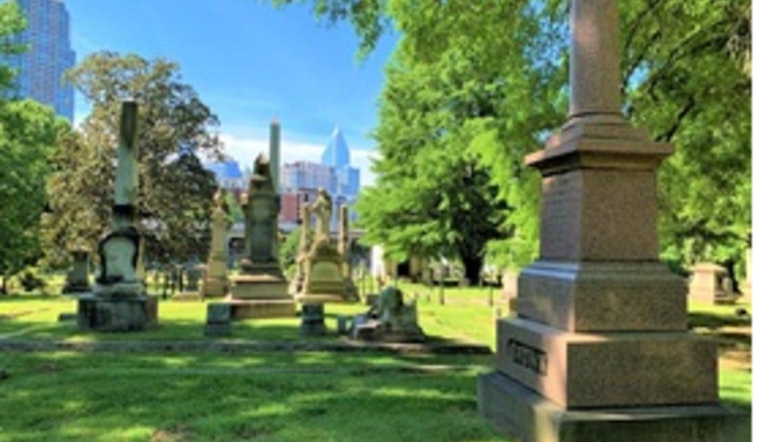
The boy’s grave lies in Elmwood, one of Charlotte’s oldest city cemeteries, where the story has lingered in local memory for generations. Detectives say putting a name on the grave would not only restore his identity but also bring closure to families who have passed down stories about a missing young man for decades. The cemetery itself is maintained by the city at 700 W. Sixth Street, according to the City of Charlotte.





