

























































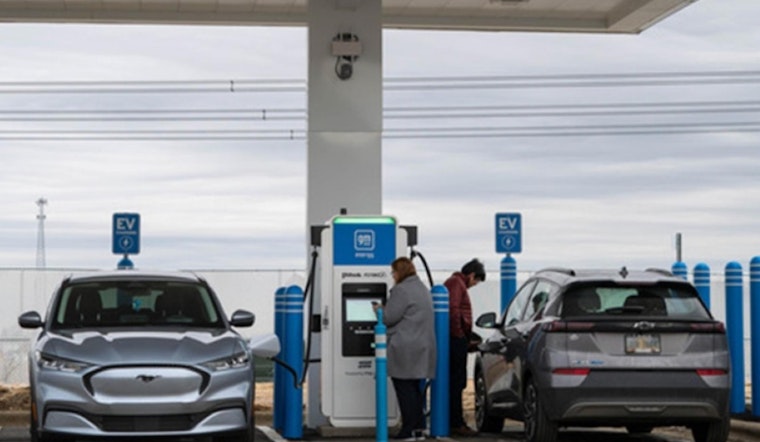
Ohio is getting serious about killing range anxiety, and Greater Cleveland is right in the middle of the action.
The Ohio Department of Transportation (ODOT) has picked 64 sites for new fast-charging electric vehicle stations, supported by $51 million in federal NEVI funds. Private developers will design, build and operate the stations across the state, with several locations planned in the Greater Cleveland area. Construction is expected to kick off early next year, and ODOT is targeting the end of 2027 to have the new chargers up and running.
As reported by WKYC, the winning developers include Aldi, BP Products North America, Francis Energy Charging, Heartland Charging Service and Love’s Travel Stops. Those companies are expected to kick in more than $26 million in matching funds, which pushes the total public-private investment north of $77 million.
Ohio’s NEVI standards require each corridor site to offer at least four DC fast-charging ports capable of roughly 150 kilowatts per port, along with basics like restrooms and food service. That setup is intended to support long-distance interstate travel and make charging stops feel more like normal road-trip breaks, as explained by DriveOhio in its NEVI plan.
Where Cleveland Will Get Chargers
WKYC mapped the Greater Cleveland sites included in this round and found a mix of interstate exits, travel plazas and big-box parking lots that should make regional trips a lot more practical for EV drivers. The station hosts are meant to catch people where they already stop, not force them into inconvenient detours.
Why This Matters
ODOT says Ohio already has about 126,212 registered electric vehicles. As of September 2025, EVs made up roughly 5% of new vehicle registrations, and the agency says those numbers are still climbing. The state and federal NEVI money is meant to keep up with that growth and cut down on the white-knuckle math of wondering whether you will make it to the next charger between metro areas. Spectrum News reported those figures along with the projected timetable for construction and openings.
“Every dollar invested in Ohio strengthens economic opportunity, from construction to long-term operation,” ODOT Director Pamela Boratyn said in a statement to Spectrum News. ODOT says the projects will generate construction jobs and create longer-term operations roles at the host sites, while also making long-distance EV travel far less of a planning exercise.
What’s Next
Developers will receive awards to install and operate the stations after contracts are finalized. ODOT expects site work to begin next year, with phased station openings rolling out through 2027. The state already has dozens of NEVI-funded stations online and others under construction, and officials say this latest round is focused on filling critical gaps along interstate corridors.
For official details about the program and recent NEVI milestones, see the Ohio Department of Transportation.





