

























































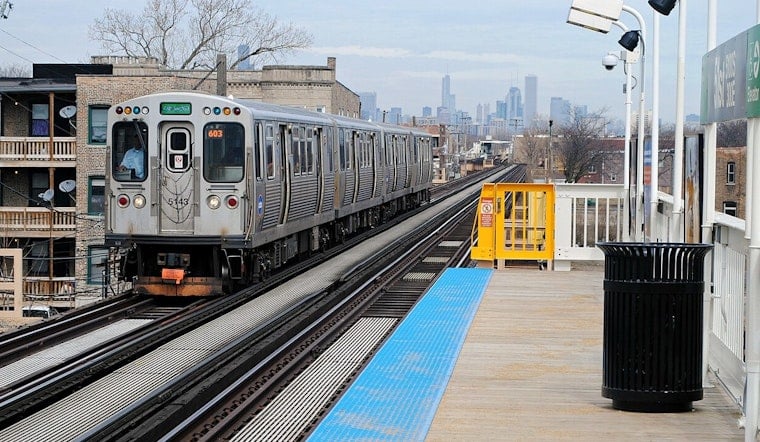
Cook County is beefing up its legal response to crime on the Chicago Transit Authority, rolling out an internal CTA crime task force inside the State's Attorney's Office that will focus on offenses on trains, buses and other transit property. The new unit will pull prosecutors and investigators from across the office to tighten up evidence handling and improve coordination with police and CTA staff after a rise in some violent incidents on the system.
In an email to staff, State's Attorney Eileen O'Neill Burke announced the creation of the internal CTA Task Force. According to WTTW, the team will include 36 assistant state's attorneys and investigators and will serve as a central hub for transit-related prosecutions. Burke's office has also told prosecutors to seek court-ordered restrictions that can bar defendants from particular CTA locations when judges decline to order pretrial detention.
The Chicago Sun-Times reports that specialized training is already underway. Prosecutors are being trained on CTA video systems and city surveillance tools and are expected to continue that work through mid-April. As part of the rollout, they are visiting the Chicago Police Department's Strategic Decision Support Centers to learn how to use real-time transit data, then bring those lessons back to the rest of the office to standardize how transit cases are handled.
The timing is not accidental. The announcement lands as the Federal Transit Administration has threatened to withhold up to $50 million from the CTA, and the agency has gone to court to recover paused federal construction grants, pushing safety and funding to the top of the local agenda, according to the Associated Press. County prosecutors and city officials say the CTA task force is one piece of a broader push to respond to that pressure.
On the operations side, CTA leaders this month rolled out a security plan that calls for roughly a 75 percent increase in policing hours, more Cook County sheriff's deputies riding trains and a mix of physical upgrades and social service outreach. The plan, and the backlash from union members who picketed outside a CTA board meeting, were detailed by WTTW.
Legal implications
Burke's office has also rolled out a written "CTA Crime Pre-trial Release Conditions Protocol" that tells assistant state's attorneys to seek pretrial detention in cases involving violent offenses on transit, and to request location-based restrictions when judges decline to detain a defendant. The idea is to give prosecutors a clearer set of tools in cases tied to CTA property, as reported by ABC7. Defense attorneys and civil liberties groups may push back on broad use of these location bans, and judges will still decide case by case whether to impose such limits.
What's next
Training for the new unit will continue into mid-April, after which prosecutors are expected to begin applying the new protocols in active CTA cases and tracking outcomes and convictions to gauge the task force's impact, the Chicago Sun-Times reports. Observers say the numbers to watch will be whether serious assaults on the system decline and whether judges are willing to consistently approve location-based restrictions during pretrial hearings.
FOX 32 Chicago aired video coverage of the new task force on April 8, including interviews with county officials and on-camera explanations of how the unit is expected to operate. County leaders stress that the task force is designed to work alongside Chicago police and CTA operations, not to replace the officers and staff who patrol trains, buses and stations every day.



