

























































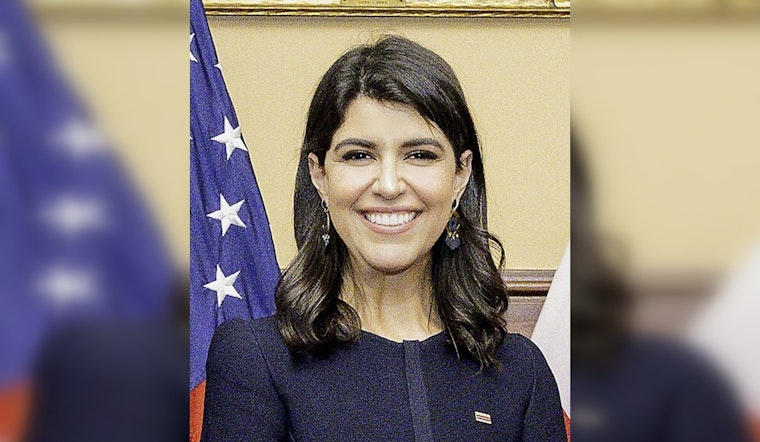
What started as routine campaign hardball in D.C. has turned into a full-blown feud. Councilmember Brooke Pinto is under fire after her campaign posted a nearly 70-page opposition research packet about fellow Councilmember Robert White on her campaign website, a file that went beyond voting records and policy positions into details about White's family and a photograph of his home. Critics say the move crossed a line, and the controversy is now hanging over the race for the District's nonvoting House delegate seat.
As reported by WUSA9, the packet, roughly 67 pages long, was uploaded to a "Media" page on Pinto's campaign site and compiled White's public record alongside personal background material. According to the outlet, the report includes information about White's father, wife and brother, as well as a photo of the family home. That blend of political critique and private detail quickly drew backlash from White and other local figures.
In a statement to WUSA9, Pinto said that "all the information in the report was gathered from publicly available sources" and defended the work as standard campaign research. Her team described the packet as background material meant to inform voters, not a personal attack, although that distinction has not quieted the outrage.
What Was Posted
The timing of the release is hard to ignore. The posting comes in the middle of an open contest for the House delegate seat long held by Del. Eleanor Holmes Norton, with the District's Democratic primary scheduled for June 16, 2026, according to the District of Columbia Board of Elections. Pinto announced her run last year to succeed Norton, and the race has already drawn citywide attention as multiple candidates build campaigns and raise money, as reported by NBC4. With voters heading to the polls in mid-June, every campaign move is under the microscope, and a 67-page dossier is not exactly subtle.
White's Response
Robert White responded by going on the offensive. He called for Pinto to withdraw from the race after the document surfaced, labeling the disclosure "a blatant violation of basic decency" and describing the personal information as "dangerous, invasive, and completely unacceptable," according to coverage by DC News Now/AOL. White singled out the inclusion of a photo of his family home as especially reckless "at a time of increasing attacks on legislators in their homes," the outlet reports. His comments have reframed what might have been dismissed as typical opposition research into a broader argument about ethics and safety in local politics.
Why It Matters
The episode highlights a familiar tension in modern campaigns: candidates are expected to dig into opponents' records, yet voters tend to bristle when political research starts to resemble a home address search. For residents following the delegate race, the dustup risks pulling focus away from policy debates and toward questions about campaign decorum, personal privacy and how far is too far when families are involved.
What's Next
It is not clear whether the opposition research packet remains live on the site or whether Pinto's campaign will change its online materials in response to the criticism. What seems certain is that the dispute will linger as the June 16 primary approaches. Voters, party leaders and rival campaigns are likely to watch how both Pinto and White handle the fallout, and whether the controversy ends up shaping endorsements, fundraising or priorities for District Democrats in the weeks ahead.


.jpg)