

























































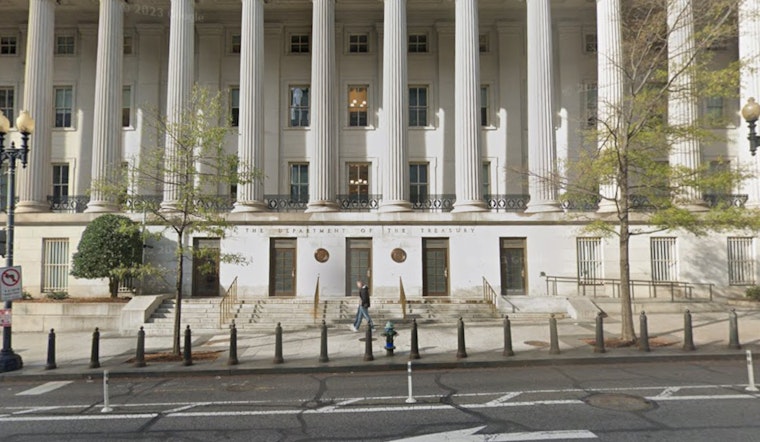
The U.S. Treasury just cracked open a key financial door for Venezuela, giving U.S. firms fresh room to move money in and out of several state-owned banks while keeping the broader sanctions regime very much alive.
On Tuesday the Treasury’s Office of Foreign Assets Control (OFAC) rolled out two new Venezuela-related general licenses that let U.S. parties resume a wide range of financial operations with specific state-owned banks and negotiate certain commercial deals with the Venezuelan government. The move restores crucial payment channels yet leaves targeted sanctions on designated individuals and other legal limits firmly in place.
General License No. 57 authorizes transactions that are “ordinarily incident and necessary” to provide financial services to, from, or for the benefit of the Central Bank of Venezuela; Banco de Venezuela S.A. Banco Universal; Banco Digital de los Trabajadores Banco Universal C.A.; and Banco del Tesoro C.A. Banco Universal, as well as any entity they own or control, according to OFAC. The license lays out a broad understanding of “financial services,” covering account maintenance, loans, wire and ACH transfers, card services, mobile wallets, payroll processing and U.S. dollar correspondent banking.
Separately, General License No. 56 clears the way for commercial-related negotiations of contingent contracts with the Government of Venezuela. It stops short of authorizing the unblocking of property or certain payment terms and explicitly bars transactions involving persons or entities in the Russian Federation, Iran, North Korea or Cuba, per OFAC.
The two new tools are the latest pieces in a gradual loosening of Venezuela-related restrictions that began in January, including licenses linked to Venezuelan oil, diluents and minerals. Sullivan & Cromwell and other legal analysts say the overall package is meant to revive trade and stabilize Venezuelan revenue, while keeping guardrails in place to limit illicit flows. In other words, more oxygen for the economy, but not a free pass.
In Caracas, officials and pro-government media framed the licenses as badly needed breathing room for public finances and payments and also warned they can be rolled back. As noted by El País, interim leaders have pressed for sanctions relief to ease liquidity pressures, even while individual designations remain untouched.
How banks will need to comply
OFAC’s language makes clear that U.S. financial institutions processing authorized transfers can generally rely on information from the originator or beneficiary, but that does not relax their duties under the Bank Secrecy Act, the USA PATRIOT Act or FinCEN regulations, according to OFAC. Banks, payment processors and remittance platforms looking to re-open corridors to the listed Venezuelan institutions will have to shore up screening tools, recordkeeping and broader risk controls before flipping any switches.
What to watch next
Industry advisers say the first signs to monitor are whether correspondent banks, card networks and remittance providers actually re-enable services and how quickly foreign counterparties buy into the new framework. Firms leaning on these authorizations should be ready for extra documentation requests, new reporting expectations and the real possibility of rapid policy reversals. Legal counsel is urging conservative implementation while further guidance and FAQs take shape, according to Sullivan & Cromwell.
The Treasury posted the licenses on its website Tuesday, and initial coverage surfaced in outlets including Reuters. Next up: follow-on guidance from OFAC and a wave of practical questions from banks and customers as they test how far the new permissions really go.


