

























































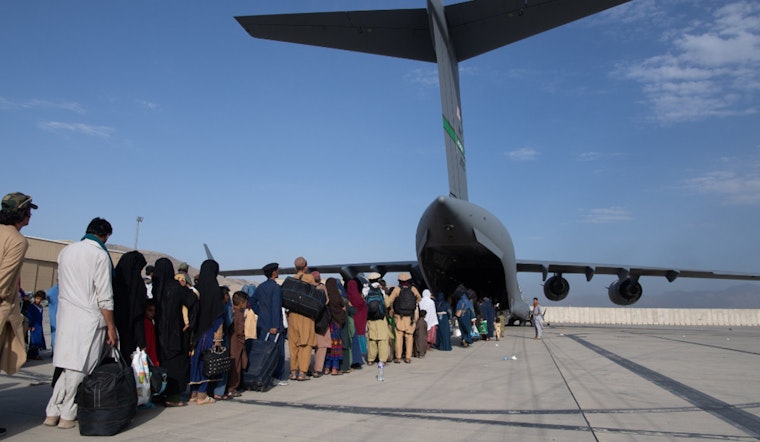
For hundreds of Afghan families who thought they were on a straight path to the United States, the destination may be changing to the Democratic Republic of Congo instead. President Trump is reported to be weighing a plan to relocate a group of Afghans who aided U.S. forces to the DRC, a move veterans' groups and refugee advocates are calling a betrayal. The group includes interpreters, former members of Afghan special operations units and family members of American service members, and more than 400 children are among them. Many have spent months at a U.S.-run transit site in Qatar, where hopes of eventual resettlement in the United States have stalled.
According to The New York Times, the administration has discussed sending as many as 1,100 Afghans from the Qatar site to the DRC, while diplomats explore third-country placements as officials move to close Camp As Sayliyah. The reporting frames the talks as part of a broader shift in U.S. migration policy that has tightened resettlement pathways since January.
Deals With Congo And Third‑Country Transfers
The Congolese government announced in early April that it would accept "third‑country" deportees from the United States under a temporary arrangement that Washington would finance, as reported by Al Jazeera. Those deals have already produced flights of migrants to other African countries and prompted criticism from legal and rights groups.
DRC's Humanitarian Strain
Humanitarian agencies say the DRC is already coping with one of the world's most complex displacement crises, with millions internally displaced and large refugee caseloads that strain food, shelter and protection systems. UNHCR warns that adding new populations without strong safeguards risks putting already vulnerable people in even greater danger.
Who Is Waiting In Qatar
About 1,100 Afghans are living at Camp As Sayliyah, a former U.S. base in Qatar that has been used as a transit platform since the 2021 evacuation. Many were told they would later resettle in the United States. Advocacy groups and local reporting say the camp population includes relatives of U.S. troops and people who have been through multiple rounds of screening but now face closed pathways. Reporting by Reason has chronicled residents' confusion and fears as the U.S. plans to demobilize the site.
Shawn VanDiver, president of the veteran‑led group AfghanEvac, said he was briefed by State Department officials and told some at the camp were being offered a stark choice: return to Taliban‑ruled Afghanistan or accept relocation to the DRC, according to The New York Times. "We think this is just them wanting to send these people back to Afghanistan, where they know they will face certain death," VanDiver told the paper.
Rights Groups Sound The Alarm
Legal societies and rights groups have challenged similar third‑country transfers elsewhere, arguing that sending people to countries where they have no ties can violate international protections and due process. Lawyers in several African countries have already moved to block deportation flights, and AP reports groups calling the deals "undignified" and legally fraught.
Veterans' groups and resettlement advocates say the United States has alternatives, including waivers, targeted exemptions, or completing vetting for those already approved, and that those options should be prioritized. No One Left Behind and other advocacy organizations are urging lawmakers to press for durable solutions rather than third‑country transfers, arguing that the U.S. has an obligation to allies who risked their lives alongside American forces. For now, diplomats are continuing talks and the fate of the Camp As Sayliyah residents remains unresolved.





