

























































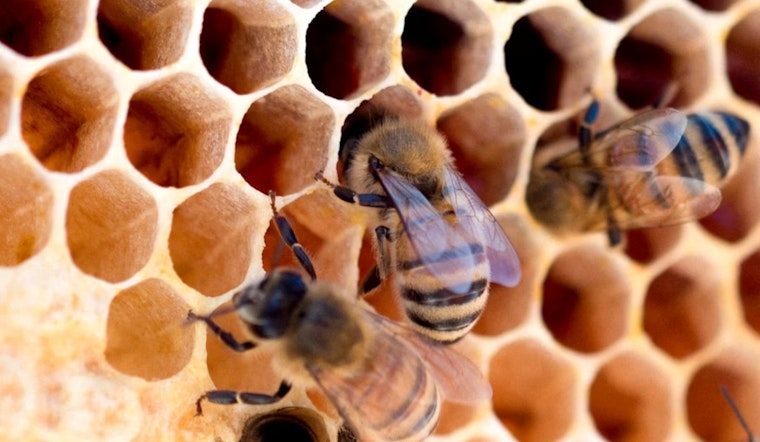
Swarm season has shown up early across the Denver metro, and local beekeepers are already hustling from yard to yard collecting clusters of bees off fences, trees and house eaves. Gregg McMahan, a longtime swarm dispatcher in northwest Denver, says he is fielding dozens of calls and is bracing for a season that could be far busier than the last few years. Volunteers are racing between jobs, scooping up swarms in strange spots, including during recent snowfall, as an early warmup sends bees out ahead of schedule.
Warm March pushed swarms early
Federal meteorologists say March 2026 delivered an unusually warm and dry stretch that likely pushed colonies into reproductive mode sooner than they normally would. That month ranked as the most abnormally hot March on record for the continental U.S., according to AP, and local beekeepers point to the early thaw as a major reason this spring’s swarms are showing up so fast.
Beekeepers racing the season
McMahan, listed by the Westminster Bee Club as a swarm dispatcher for the northwest metro, says he is already “20 swarms deep” and expects to top 100 collections this season, a surge he described to KDVR. He has been sent to clusters all over the city and recently moved a swarm off a fence into a temporary box, then delivered it to Standley Lake Regional Park so the bees could be relocated safely.
How to report a swarm
The Colorado State Beekeepers Association runs a free statewide swarm hotline, 1‑844‑SPY‑BEES (1‑844‑779‑2337), which connects callers with volunteer catchers. The CSBA explains that dispatchers sort calls by region and that a beekeeper often arrives within about an hour. Local outlets such as Denver7 advise people to keep their distance and wait for trained help instead of trying to deal with a swarm on their own.
What catchers are seeing
Call volumes jump around from year to year. McMahan told KDVR that about 400 calls came in two years ago, compared with roughly 100 last year, and volunteers are already stacking up dozens of runs this April. Many local clubs coordinate through texted photos and regional dispatch lists, so beekeepers ask callers to send pictures and a location to speed things up, a system outlined on the Westminster Bee Club swarm page.
Swarms can look intense, but they are usually part of normal, healthy colony reproduction. Experts say the bees typically are not aggressive unless provoked, and rescuing them keeps important pollinators in usable habitat. If you spot a swarm that is not tucked inside a structure, keep kids and pets away, take a few photos, and use the statewide hotline or local bee club lists to get a trained beekeeper on the way.





