

























































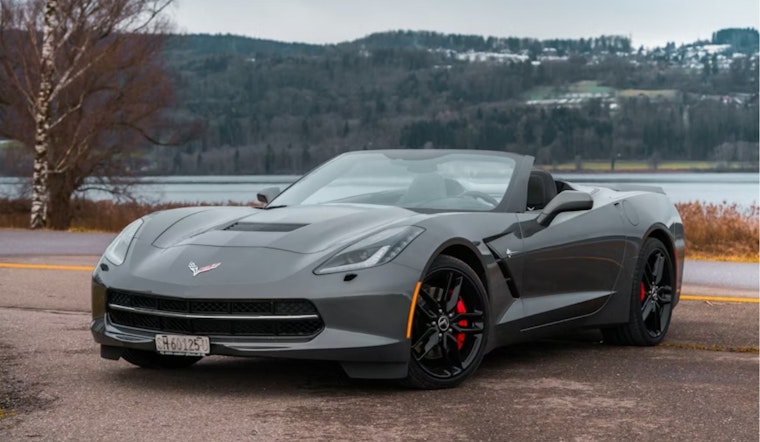
General Motors has quietly put a freeze on sales of certain 2025 and 2026 Chevrolet Corvette C8s, thanks to the loudest kind of problem a sports car can have: a safety glitch you cannot see. Engineers found a software bug in the exterior lighting control module that can fail to warn drivers if a rear turn signal stops working. The stop-sale and safety recall cover about 3,324 cars in total, roughly 2,886 from the 2026 model year and 438 from 2025, and affected vehicles on dealer lots are parked until GM rolls out fixes.
Owners who have accepted over-the-air (OTA) updates may get the repair delivered wirelessly. Those who have not enabled OTA will need to visit a dealer for a manual software flash. Dealers have been told they are not allowed to hand over any affected Corvette until the update is completed.
What The Recall Covers
According to MotorTrend, GM's filing for Program N252541250, tied to NHTSA notice 26V213, points to a calibration issue in the exterior lighting control module. That software bug can keep the car from warning the driver when a rear turn-signal lamp fails.
The notice, labels this as a safety risk because a driver who does not know a turn signal is out is more likely to be involved in a crash. MotorTrend reports that the details match what dealers see in GM's internal portal.
How The Fix Will Be Delivered
Per GM, the remedy is a software calibration update to the exterior lighting control module. If a Corvette has OTA enabled, the car can accept the fix wirelessly. If OTA is not enabled, owners will need to bring the vehicle to a GM dealer, where technicians will perform a manual software flash at no charge under the recall.
GM directs owners to type in their 16-digit VIN on its recall page to see whether a specific Corvette is covered, which is the fastest way to learn if the car is part of this particular glitch club.
Dealers And The Stop-Sale
Dealers have been instructed not to sell or deliver any affected Corvette until the recall repair is applied, a standard move when a safety-related system might not meet federal rules. Road & Track reports on the stop-sale, noting that showroom cars are essentially in time-out until the software is sorted out.
MotorTrend adds that GM's dealer portal shows the 2026-model update is already available, while the software fix for some 2025 units is still under development. Practically, that means many 2026 Corvettes on lots can be updated and returned to sale fairly quickly, but some 2025 owners and unsold cars may have to wait a bit longer for their turn in the software queue.
Why This Matters
Federal safety rules require cars to alert drivers when crucial exterior lamps, including turn signals, fail. In its notice, GM cites noncompliance with section S9.3.6 of FMVSS No. 108, the federal lighting standard that governs lamp performance and how failures are communicated to drivers.
The standard, along with the regulatory backstory, is laid out in government rulemaking documents such as the Federal Register. Regulators view the lack of a warning for a failed signal as a meaningful safety gap, since everyone else on the road is relying on those blinkers to predict what a driver is about to do.
What Owners Should Do Next
Owners who think their Corvette might be caught up in this should first run their 16-digit VIN through recall tools from GM or the federal search at NHTSA. Those sites will confirm whether the car is included and outline the next steps.
If the vehicle is part of the recall, owners can accept an OTA update when prompted or schedule a visit with a local GM dealer to have the software flashed free of charge. Dealers must complete the remedy before selling or delivering any affected car, and GM plans to notify owners as fixes become available.
How This Fits With Past Corvette Recalls
This is not the first time the C8 family has found itself under the regulatory microscope. Last year, GM issued a voluntary recall and stop-sale for certain Z06 and ZR1 models because of a fuel-spillage fire risk, a reminder that high-performance hardware and modern software both have the potential to send lawyers and engineers scrambling.
Reporting from Autoblog and other outlets shows GM is working through several fixes across Corvette variants while regulators keep tabs on compliance. For current and would-be owners, the bottom line stays simple and not particularly glamorous: run the VIN, confirm any recalls, and make sure all the software and safety work is done before taking the keys.





