

























































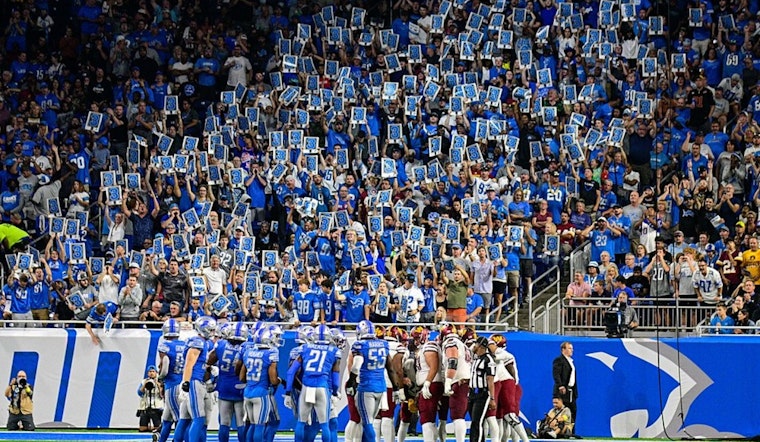
Detroit, The Lions quietly reclaimed part of former All-Pro center Frank Ragnow’s signing bonus after he stepped away from football, a move team president Rod Wood confirmed this week and one that instantly set off former teammates and fans. The decision revives a long-running franchise practice that has a habit of creating ugly optics around abrupt retirements.
How the disclosure came out
Wood acknowledged the repayment while speaking at offseason league events and framed it as a straightforward question of precedent and salary-cap mechanics. That admission surfaced in local coverage and a segment that highlighted the decision and the blowback it triggered among players and pundits, as reported by FirstCoastNews.
Wood invokes Sanders precedent
Wood defended the move by pointing to franchise history, saying, “Our precedent goes all the way back to Barry Sanders,” and arguing that prorated signing bonuses function as advance payments that can be returned if a player does not play out all contract years. CBS Sports reports that the club recouped a portion of the unearned proration after Ragnow retired with two seasons left on his deal.
Contract math and what was at stake
Contract records show that Ragnow’s 2021 extension included a roughly $6 million signing bonus that hit the cap in prorated chunks over several seasons. That structure left about $3 million in remaining proration when he stepped away. A breakdown by Pro Football Network details how those prorations landed on the cap sheet and why reclaiming them frees up additional salary-cap space for Detroit.
Teammates and pundits push back
The move drew swift pushback on social media and from former teammates. Ex-Lion Alex Anzalone labeled the decision “tone-deaf” on X, and high-profile voices such as Jason Kelce questioned the optics of going after money from a respected veteran who battled injuries. Those reactions, along with fan outrage and broader debate, were compiled by national outlets, including coverage on Yardbarker.
Why the optics matter
Detroit’s willingness to claw back prorated bonuses is not new, and it has previously strained relationships with franchise icons. Barry Sanders and Calvin Johnson each returned portions of bonuses after abrupt exits, and that history still colors how fans and agents view the team. Aggregated reporting and reaction pieces note that the latest chapter with Ragnow could complicate future negotiations with veteran free agents who pay close attention to how teams treat their stars on the way out, according to coverage from NFLTradeRumors.
Legal and contractual basics
Under the NFL’s collective bargaining framework and longstanding league practice, teams can seek to reclaim prorated signing-bonus money when a player retires early or otherwise departs before fulfilling the full term of a contract. Similar recoupment efforts have surfaced in prior disputes and suspensions across the league, as outlined in earlier coverage by Sportsnet.
For now, the fallout looks more reputational than transformational. The Lions gained some cap flexibility, but they also reopened old wounds with a fan base that has not forgotten how previous stars were treated on their way out. The next questions are whether the club ultimately extends an olive branch to Ragnow and whether agents start pushing harder for contract language that protects their clients from similar clawbacks.





