

























































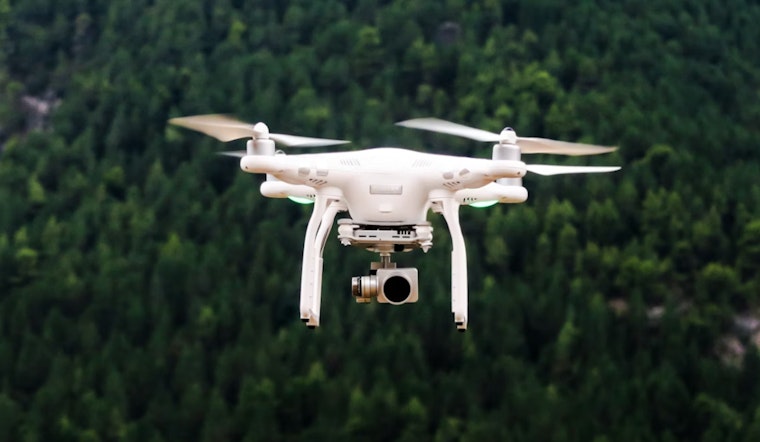
Mid-America Transplant has started flying donor blood samples by drone, launching on Wednesday, April 1, 2026, in a new Missouri health-care drone corridor that is designed to cut delivery times and costs. The test flights take a once-routine leg of the transplant process, getting lab samples to a St. Louis laboratory, and lift it into the air, with partners saying the approach could help rural hospitals and speed up transplants.
The rollout came with a ribbon-cutting and first-flight demonstration at Missouri S&T’s General Services Building in Rolla, where university, industry and transplant officials gathered to watch the drones go to work. Organizers are calling the initiative the nation’s first rural health-care drone corridor, according to Missouri S&T.
How the corridor works
The drone route starts near Springfield and, according to First Alert 4, covers roughly 94 miles to Rolla, where technicians swap batteries, then finishes a 66-mile leg to a St. Louis-area drop site at the Boles Fire Protection District. The aircraft follow defined flight lines along existing railway corridors located several miles north of Interstate 44 and operate between about 300 and 350 feet above the ground during daylight.
"Mid-America Transplant has always embraced innovation to enhance donation and transplantation, and this drone corridor represents an exciting step forward," Mid-America Transplant President and CEO Kevin Lee said in a statement to First Alert 4. The organization reports that retrieving a donor blood sample from Springfield used to take more than three hours by ground. By drone, the trip now takes under two hours and costs about one tenth as much.
The tech and partners
Valkyrie UAS Solutions is running the operation with fixed-wing drones built by Swoop Aero that can cruise near 80 miles per hour, carry about a dozen pounds and reach roughly 100 miles on a single charge, as reported by Governing. Partners say Rolla will function as a hub where crews can swap batteries and hand off payloads, which lets them cover the roughly 200-mile Springfield to St. Louis corridor while steering clear of dense neighborhoods.
What this means for rural hospitals
Project leaders say the corridor is aimed at giving rural hospitals faster access to specialized testing and supplies so families are not stuck driving long distances for donor screening and other services. Mid-America’s broader plans, and the possibility that the corridor could eventually carry medications or even organs, have been highlighted in local reporting and public radio coverage. Background on that work is available from St. Louis Public Radio.
Regulatory runway
The corridor still depends on Federal Aviation Administration approvals for beyond-visual-line-of-sight operations, along with careful routing that avoids populated areas. Partners say they will continue test flights and pursue waivers before moving into regular service. Industry coverage notes that Valkyrie has received BVLOS approvals in other regions and that the group plans ongoing community outreach and technical validation as it scales up flights, according to Governing.





